
 21 min read
 TL;DR:
This article compares 10 AI fitness app development companies, including MobiDev, Appinventiv, Softeq, TechAhead, and Biz4Group, focusing on their ability to build AI-driven platforms, from wearable-integrated workout apps with personalized recommendations to complex computer vision-powered motion analytics systems.
Vendors are evaluated based on AI/ML expertise, fitness domain experience, computer vision capabilities, wearable and IoT integrations, and engineering scalability.
It also highlights common hiring mistakes, a vendor evaluation framework, a discovery call checklist for shortlisting top development companies that match your product needs, and typical cost and timeline considerations for AI fitness app development.
As Senior Solutions Manager at MobiDev, I help businesses assess technical approaches for building competitive digital fitness products, where AI is not treated as a hype feature but as a practical tool for solving specific product challenges, such as improving user retention through personalized workouts, enabling smarter monetization models, or delivering real-time coaching and performance insights to prevent injuring.
For this article, we compared AI fitness app development vendors to showcase options for different product goals and technology needs, helping you find the best fit.
Comparison Table: 10 Notable AI Fitness App Development Companies in 2026
| # | Company | Best for | Fitness App Types | Clutch Reviews | Hourly Rate |
|---|---|---|---|---|---|
| 1 | MobiDev |
|
|
4.9/5 | $49–$100 |
| 2 | TechAhead | Companies seeking to build consumer wellness apps and large fitness platforms | Personal trainer apps / Wearable integrations / Fitness subscription platforms | 4.9/5 | $25–$49 |
| 3 | Softeq | Companies looking for a vendor to build connected fitness hardware platforms | Wearable firmware development / AI analytics dashboards / Cross-platform mobile apps | 4.9/5 | Undisclosed |
| 4 | Appinventiv | Companies planning to launch large-scale AI fitness platforms | AI workout recommendation engines / Wearable device integrations / AR/VR fitness features | 4.6/5 | $25–$49 |
| 5 | Stormotion | Fitness hardware companies and startups building connected fitness ecosystems | AI-powered workout apps / Companion apps for smart fitness equipment / Activity tracking and performance analytics | 5/5 | $50–$99 |
| 6 | Biz4Group | Companies building AI-powered fitness analytics platforms | AI workout apps / AI personal development apps / Performance improvement platforms / Automation solutions for coaches | 4.9/5 | $25–$49 |
| 7 | Riseapps | Startups launching fitness apps with wearable integrations | Workout apps and coaching platforms / Digital platforms for trainer-to-client interactions / Digital wellness products | 4.9/5 | $50–$99 |
| 8 | Interexy | Startups building advanced Health & Fitness Apps | Workout and Exercise Apps / Fitness Activity Tracking Apps / Social fitness applications / Yoga and meditation solutions | 4.9/5 | $50–$99 |
| 9 | Idea Usher | Startups testing new product ideas | Workout and Exercise Apps / Diet and Nutrition Apps / Yoga and Meditation Apps / Activity Tracking Apps | 4.7/5 | $25–$49 |
| 10 | Apptunix | Rapid MVP development for fitness startups | AI Personal Trainer Apps / AI Activity Tracking Apps / AI Health Analytics Apps / AI Nutrition & Diet Apps | 4.8/5 | $25–$49 |
Detailed AI Fitness App Development Vendor Profiles
1. MobiDev
MobiDev is a software engineering & consulting company specializing in AI, computer vision, and mobile development with focus on fitness, sports, health and wellness industries. The firm has been building fitness applications since 2020 and has worked with 50+ fitness & sports clients, combining domain expertise with in-house AI engineering capabilities.
Publicly available case studies and success stories
- AI-Powered HIIT Workout App Development Grew User Base by 196.3% YoY
- AI Coach Development for Strength Training Increased Client Retention by 52.3%
- AI Coach App Development for Yoga Platform Helped Increase Premium Accounts by 12%
- AI Coaching Agent Development Increased User Retention by 24% in a Fitness App
- Human Pose Estimation Platform for Athletes Earned TOP 10 AI Sports-Tech Startup 2024
Best for
- Startups launching or scaling AI-powered fitness products
- Entrepreneurs building new AI-driven fitness tech ventures
- Fitness app owners struggling with user retention
- Fitness providers seeking to increase revenue
AI Fitness App Development Capabilities
- AI personal coach apps with human pose estimation-based corrective feedback and personalized recommendations
- Wearable-integrated AI fitness apps to deliver insights and training guidance
- AI agents that provide conversational coaching, adjust workout plans in real time, and guide users through training sessions.
- AI nutrition & diet coaching apps with AI-powered meal planning and nutrition tracking
- AI fitness gamification apps to increase user engagement
- AI rehabilitation & injury prevention apps focusing on physical therapy and recovery exercises
- AI mental wellness & fitness apps focused on mind-body fitness programs
- AI fitness marketplace apps to connect users with trainers and classes while using AI for matching and recommendations
- AI voice workout assistants that combine speech recognition, natural language processing (NLP), and fitness analytics to create an interactive training experience
Tech Stack
- AI consulting & engineering: custom model development, personalization engines, adaptive workout logic, LLM integration.
- Computer vision: AI pose estimation solutions for movement tracking and performance analysis
- Wearable SDK integrations: Apple Watch, fitness trackers, IoT-connected devices
- Native mobile app development for iOS & Android with Swift / Kotlin
- Cross platform mobile app development with Flutter, ReactNative
- Web application development
- AR/VR modules based on ARKit, ARCore, Unity for immersive AI-enhanced workout experiences
- Secure health data processing in compliance with GDPR and HIPAA
- Secure cloud deployment (AWS, Google Cloud, Azure)
Regional Market Expertise
MobiDev partners with fitness and wellness companies across the USA, Canada, the UK, and the European Union to build AI-powered fitness platforms adapted to local market expectations, compliance standards, and subscription-driven business models. With hands-on experience delivering GDPR-ready applications for UK and EU audiences alongside scalable cloud-native ecosystems for North American users, MobiDev helps brands create secure digital fitness products featuring AI coaching, personalized workout experiences, wearable connectivity, and real-time performance analytics for global user bases.
Quick Facts
Founded: 2009
HQ: Norcross, GA and Sacramento, CA, USA
Team Size: 200+
Clutch Reviews: 4.9/5
Average Hourly Rate: $49–$100/hr
2. TechAhead
TechAhead is a mobile product engineering company that develops fitness applications with AI-driven personalization and wearable integrations with focus on workout tracking platforms, digital coaching systems, and subscription fitness apps.
Best For
- Companies seeking a vendor to build consumer wellness apps and large fitness platforms
AI Fitness App Development Capabilities
- Personal trainer apps
- Wearable integrations
- Fitness subscription platforms
Tech Stack
- Chatbots & Conversational AI
- Natural Language Processing
- AI Recommendation Systems
- Swift, Kotlin, React Native, cloud AI
Quick Facts
Founded: 2009
HQ: Agoura Hills, CA, USA
Team Size: 50–249
Clutch Reviews: 4.9/5
Average Hourly Rate: $25–$49/hr
3. Softeq
Softeq is a digital engineering firm that builds connected fitness ecosystems combining mobile apps, IoT devices, and cloud analytics. The company develops solutions that integrate smart fitness equipment, wearable sensors, and machine learning models for performance tracking. Softeq’s experience in embedded systems and device firmware allows it to create fitness platforms where mobile applications interact directly with connected hardware and biometric data streams.
Best For
- Companies looking for a vendor to build connected fitness hardware platforms
AI Fitness App Development Capabilities
- Wearable firmware development
- AI analytics dashboards
- Cross-platform mobile apps
Tech Stack
Quick Facts
Founded: 1997
HQ: Houston, TX, USA
Team Size: 250–999
Clutch Reviews: 4.9/5
Average Hourly Rate: Undisclosed
4. Appinventiv
Appinventiv is a large digital product development company that builds fitness and wellness applications with AI-powered recommendation engines and scalable mobile platforms, integrating wearable devices and health data APIs while using analytics systems to personalize workouts and improve long-term user engagement.
Best For
Companies planning to launch large-scale AI fitness platforms.
AI Fitness App Development Capabilities
- AI workout recommendation engines
- Wearable device integrations
- AR/VR fitness features
Quick Facts
Founded: 2015
HQ: India / USA
Team size: 1000+
Clutch reviews: 4.6/5
Average Hourly Rate: $25–$49/hr
5. Stormotion
Stormotion is a mobile and web development company that builds custom apps for fitness, focusing on AI personalization, wearable data processing, and connected device integrations.
Best For
Fitness hardware companies and startups building connected fitness ecosystems
AI Fitness App Development Capabilities
- Companion apps for smart fitness equipment with BLE connectivity
- Activity tracking and performance analytics
Tech Stack
- Mobile Development
- AI / ML (TensorFlow, Google ML Kit, OpenAI SDK)
- External Devices / IoT & Connectivity
- Cloud
Quick Facts
Founded: 2017
HQ: Germany / distributed team (Europe)
Team size: 10 – 49
Clutch reviews: 5/5
Average Hourly Rate: $50 – $99/hr
5. Biz4Group
Biz4Group is a technology development company that builds AI-enabled applications for IoT, healthcare, and fitness sectors. In fitness platforms, the company integrates wearable sensors, cloud analytics, and machine learning models to track activity and monitor performance.
Best For
- Companies building AI-powered fitness analytics platforms
AI Fitness App Development Capabilities
- Predictive health analytics
- Real-time workout monitoring
- Wearable integrations
Tech Stack
Quick Facts
Founded: 2003
HQ: Orlando, FL, USA
Team Size: 50–249
Clutch Reviews: 4.9/5
Average Hourly Rate: $25–$49/hr
7. Riseapps
Riseapps is a software development company focused on health and fitness applications, particularly mobile platforms with wearable integrations and analytics-driven personalization.
Best For
- Startups launching fitness apps with wearable integrations
AI Fitness App Development Capabilities
- Workout app development and coaching platforms designed to track user activity and progress
- Digital platforms for trainer-to-client interactions to deliver adaptive training plans and performance insights
- Digital wellness products
Tech Stack
- AI/Data: TensorFlow, Python ML libraries
- Mobile: React Native, Swift, Kotlin
- Frontend: React, React Native
- Backend: Node.js, NestJS, Django
- Cloud & DevOps: AWS, Google Cloud, Docker, Kubernetes
Quick Facts
Founded: 2016
HQ: Estonia
Team Size: 50
Clutch Reviews: 4.9/5
Average Hourly Rate: $50–$99/hr
8. Interexy
Interexy develops digital health and fitness applications that combine mobile technology, wearable integration, and data analytics. The company builds platforms that monitor user activity, track fitness metrics, and deliver personalized insights based on behavioral data.
Best For
- Startups building advanced Health & Fitness Apps
AI Fitness App Development Capabilities
- Workout and Exercise Apps
- Fitness Activity Tracking Apps
- Social fitness applications
- Yoga app development and meditation solutions
Tech Stack
- AI/Data: TensorFlow, Python ML frameworks
- Frontend: React, Vue.js
- Backend: Node.js, Laravel, Django
- Mobile: Swift, Kotlin, React Native, Flutter
- Cloud: AWS, Google Cloud, Azure
Quick Facts
Founded: 2017
HQ: Miam, USA
Team Size: 100
Clutch Reviews: 4.9/5
Average Hourly Rate: $50-$99/hr
9. Idea Usher
Idea Usher is a technology consulting and development company that helps startups build AI-enabled mobile applications, including fitness and wellness platforms. The company focuses on rapid MVP development that integrate AI features such as workout recommendations, chatbot coaching, and activity tracking.
Best For
- Startups testing new product ideas
AI Fitness App Development Capabilities
- Workout and Exercise Apps
- Diet and Nutrition Apps
- Yoga and Meditation Apps
- Activity Tracking Apps
Tech Stack
- AI/ML: TensorFlow, PyTorch, OpenAI APIs
- Mobile: Flutter, React Native, Swift, Kotlin
- Frontend: React.js, Angular
- Backend: Node.js, Django, Spring Boot
- Cloud: AWS, Google Cloud, Azure
Quick Facts
Founded: 2014
US HQ: India
Team Size: 250
Clutch Reviews: 4.7/5
Average Hourly Rate: $25–$49/hr
10. Apptunix
Apptunix is a mobile app development company that builds fitness and lifestyle applications for startups and consumer brands. Its solutions include workout tracking systems, wearable integrations, and cloud backends that support community engagement and progress monitoring. Apptunix often incorporates analytics and personalization features that help fitness apps recommend workouts and adapt training programs based on user behavior.
Best For
AI Fitness App Development Capabilities
- AI Personal Trainer Apps to generate personalized workout plans using AI
- AI Activity Tracking Apps to monitor daily movements, workouts, and physical activity
- AI Health Analytics Apps to provide predictive insights from fitness and health data
- AI Nutrition & Diet Apps to track food intake and recommend meal plans
Tech Stack
- AI/Data: Python ML libraries, analytics tools
- Frontend: React, Angular
- Backend: Node.js, Laravel, Django
- Mobile: Flutter, React Native, Swift, Kotlin
- Cloud: AWS, Google Cloud, Azure
Quick Facts
Founded: 2013
HQ: India / UAE
Team Size: 300
Clutch Reviews: 4.8/5
Average Hourly Rate: $50–$99/hr
Selection Methodology
The companies in this ranking were selected through a structured evaluation process that combined vendor discovery from multiple sources, including development vendor directories (Clutch, TopDevelopers, GoodFirms), industry articles, and community discussion. Each company was scored by capabilities in AI fitness app development.
Vendors were assessed based on criteria such as AI and machine learning expertise, experience with fitness or health applications, computer vision and wearable integration capabilities, scalability of cloud infrastructure, and publicly available case studies and technical evidence.
TOP AI Fitness App Development Vendor Differentiation
| # | Category | Companies |
|---|---|---|
| 1 | Computer Vision Leaders | MobiDev |
| 2 | Wearable / IoT Fitness Ecosystems | Softeq, MobiDev, Stormotion |
| 3 | Data / Analytics-Heavy Platforms | Biz4Group, MobiDev, Interexy |
| 4 | Startup-Focused Vendors | Riseapps, MobiDev, Idea Usher, Apptunix |
AI Fitness App Development Vendor Selection Algorithm
Choosing a development partner shouldn’t be a guessing game based on who has the best sales pitch. It requires a systematic approach to filter out the agencies that just talk about AI from the ones that are actually involved in engineering. Here is the exact selection algorithm to use when vetting potential vendors.
6 Common Mistakes to Avoid when Hiring an AI Fitness App Development Company
Founders constantly blow their funding by missing obvious red flags during early vendor meetings. It’s the same with our clients. We often analyze their prior negative experience with other companies. And here are the most frequent failures: overlooking their case studies and testimonials, rushing the process, and focusing on pricing only. Watch out for these exact traps before signing a master services agreement.
1. Hiring a Vendor Without Proven AI Expertise
Many software shops claim AI capabilities but rely entirely on basic rule-based systems or third-party APIs. While integrating an LLM API technically adds “AI” to a project, it is practically useless for real-time video processing. You simply cannot ping an LLM for every single video frame when you need ultra-low latency.
Building a functional AI product requires deep expertise in custom machine learning, computer vision, and data analytics. Never sign a contract without verifying that the agency showcases real AI projects, technical blogs, or ML engineering teams. They must be capable of training custom models from scratch, not just routing text prompts.
2. Underestimating the Software Engineering Required for Real-Time Workflows
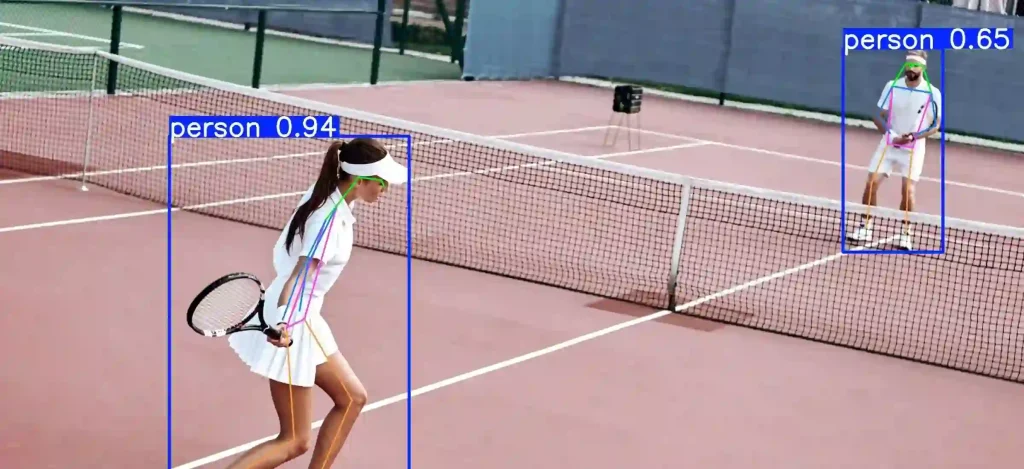
Advanced features like real-time form correction, rep counting, and posture analysis rely on managing incredibly complex real-time data streams. It is not just about plugging in pose estimation and movement detection models like MediaPipe or YOLO. Those models are what they are; the real challenge is orchestrating the entire software workflow around them.
Your team must seamlessly capture camera frames, listen for voice commands, and process pose models simultaneously. They also have to form data batches, analyze movements, and trigger the right audio feedback at the exact right millisecond. On top of that, the system still needs to record video for post-session visualization without crashing the app.
3. Underestimating the Content and Data Requirements for Human Pose Estimation (HPE)
Founders rarely budget for the sheer volume of content an HPE app needs to actually work. You have to shoot reference videos for every acceptable camera angle. You also need hundreds of pre-recorded voice cues or a highly tuned LLM agent with text-to-speech to make the coaching sound human.
It is a massive operational lift. Only after you lock down this basic movement analysis and content layer should you start worrying about feeding user data, training history, and biometric inputs into the system. So make sure that the selected companies have expertise in human pose estimation development.
4. Neglecting Wearable and Sensor Integration
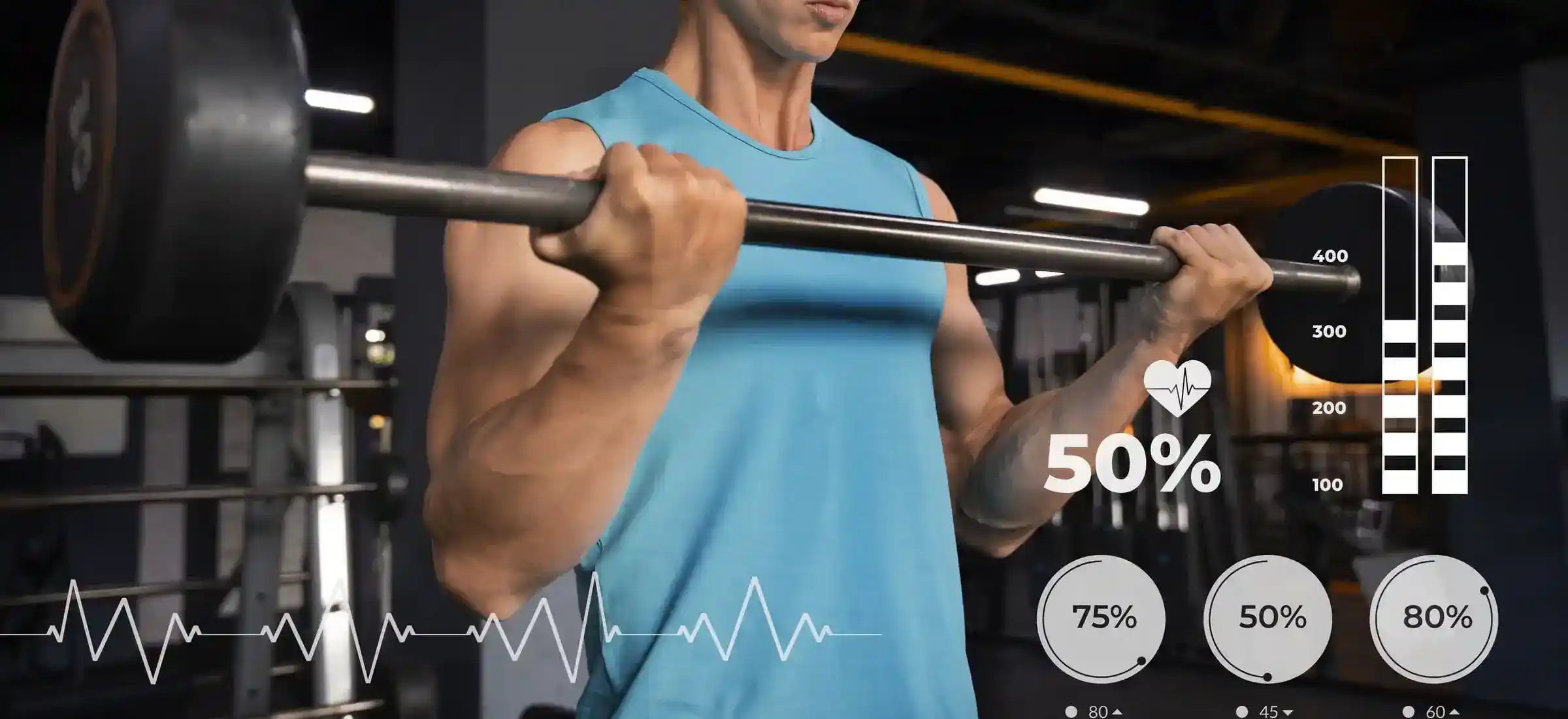
Camera tracking is inherently noisy. Pairing it with wearables such as smartwatches, fitness bands, and heart rate monitors fixes a lot of those blind spots. Combining pose data with raw accelerometer and gyroscope feeds from an Apple Watch gives you much deeper context on things like bicep curls or user fatigue.
But keeping a Bluetooth stream alive while a user is sweating and sprinting is a known engineering headache. If the vendor lacks painful, hands-on experience fighting with Apple HealthKit, Google Fit, Fitbit, or IoT sensors, the connection will drop. When it drops, the tracking logic breaks.
5. Failing to Evaluate AI Scalability and Model Maintenance
Algorithms actively degrade over time if left alone. As new data floods the system, the architecture requires continuous improvement, retraining, and monitoring to prevent prediction drift. Getting a model to work for launch day is the easy part. The actual challenge is building the backend for automatic model updates, performance monitoring, and long-term optimization. The vendor must prove they can actually support MLOps pipelines, cloud AI infrastructure, and ongoing model maintenance, otherwise the core features will break within a few months.
6. Lacking Experience with Time-Series Data and Signal Processing
This is the absolute key to building functional AI coach fitness apps. You cannot just look at raw pose data and expect it to automatically make sense. Your engineering team must know how to analyze HPE data from multiple distinct perspectives.
Specifically, they need to approach the data from a signal time-series, statistical, linear algebra, and geometrical perspective. Truly understanding what you can build with raw tracking data requires diving deep into these exact mathematical fields. Without this specialized signal processing expertise, the app will never track complex movements accurately.
To keep vendor assessment completely objective, score them against a rigid framework. This stops teams from getting distracted by a flashy UI portfolio. What is really needed here is heavy backend engineering and serious math.
AI Fitness App Development Vendors Evaluation Framework
Here is a baseline weighting system to rank each candidate fairly based on what actually matters for an AI-driven product. Thanks to its selection categories, you can check a potential vendor and assign a percentage so that you get an idea of whether this vendor fits your company’s needs.
| # | Category | Weight | When It Matters |
|---|---|---|---|
| 1 | AI / ML Engineering Depth | 25% | Building custom pose detection, personalization logic, and predictive analytics from scratch. |
| 2 | Computer Vision & Wearable Integration | 20% | Successfully running live tracking and pulling stable biometric feeds from external sensors. |
| 3 | Mobile Development Capability | 15% | Shipping high-performance native or cross-platform apps that don't melt the user's battery. |
| 4 | Real-Time & Signal Processing | 10% | The ability to handle time-series data and run heavy parallel workflows (camera, mic, ML models) simultaneously on a single phone. |
| 5 | Fitness Domain Expertise | 10% | Familiarity with workout platforms. (Note: Engineering skills matter more here; your internal team should drive the actual sports logic). |
| 6 | Scalability & Cloud Architecture | 10% | Building the MLOps and backend infrastructure needed to support massive consumer traffic and model updates. |
| 7 | Case Studies & Proof of Work | 10% | Verifiable evidence of real, deployed AI products in the market, not just Figma concepts. |
Total weight = 100%
Of course, you can alter the percentages based on your specific needs. For example, for those who don’t focus on human pose estimation capabilities, computer vision isn’t that important. If your product belongs to a regulated niche, you should increase the percentage of security.
Once the shortlist is ready, it is time to get them on a call where it is critical to control the technical deep dive from minute one.
Discovery Call Checklist: 19 Questions to Ask When Choosing the Best AI Fitness App Development Company
Use this exact list of questions to ask during initial vendor meetings to force answers to actual engineering questions, rather than listening to a sales pitch.
| # | What to Evaluate | What to Ask |
|---|---|---|
| 1 | Experience with building fitness apps | What types of fitness platforms have you developed (personal trainer apps, tracking apps, coaching platforms)? |
| 2 | Portfolio depth in fitness solutions | Can you share case studies or demos of fitness apps you’ve built? |
| 3 | AI & Machine Learning expertise | Have you built AI-powered fitness apps before? |
| 4 | Applied AI use cases in fitness | What AI technologies do you use in fitness applications (ML, computer vision, recommendation systems)? |
| 5 | Computer vision & motion tracking capabilities | Have you implemented real-time pose detection or motion tracking? |
| 6 | Computer vision technology stack & accuracy | Which tools do you use for computer vision (OpenCV, MediaPipe, custom ML models)? |
| 7 | Motion tracking accuracy & reliability | How do you ensure accuracy in exercise detection? |
| 8 | Wearable & device integration | Have you worked with wearable integrations (Apple HealthKit, Fitbit, Garmin, Google Fit)? |
| 9 | Scalability & cloud infrastructure | Which cloud platforms do you use (AWS, GCP, Azure)? |
| 10 | Architecture scalability approach | Do you use microservices or scalable architectures? |
| 11 | MLOps & AI lifecycle management | How do you manage AI model deployment and updates (MLOps)? |
| 12 | Security & health data compliance | How do you ensure data security and privacy? |
| 13 | Regulatory compliance readiness for health data related products | Are you familiar with HIPAA compliance requirements? |
| 14 | Authentication & user data protection methods | What encryption and authentication methods do you implement? |
| 15 | Development process & collaboration | What development methodology do you follow (Agile, Scrum)? |
| 16 | Communication & responsiveness | How often will we receive progress updates or demos? |
| 17 | Project management tools & workflow transparency | What collaboration tools do you use (Jira, Slack, GitHub)? |
| 18 | Cost & timeline expectations | What factors influence the final development cost? |
| 19 | Startup readiness & MVP support | Do you offer rapid MVP development for startups? |
FAQ
It strictly depends on how many engineering hours you need. If you just want to test the core mechanics, a prototype or Proof of Concept (PoC) takes 1 to 3 months and will run you roughly $17,000 to $20,000.
Stepping up to a proper MVP with a solid minimal set of features usually takes 6 to 9 months, pushing the budget to around $40,000–$50,000.
A full-scale custom AI fitness product? Budget for at least a year of continuous work and anywhere from $100,000 to $200,000+, depending entirely on the complexity of the exercises and features.
We also run quick feasibility checks (AI consulting under two weeks) to validate the tech before you commit to a massive build.