
Human Pose Estimation App Development for Fitness & Sports
Build an AI-powered coach app to drive retention and increase revenues through a premium feature your users will love.





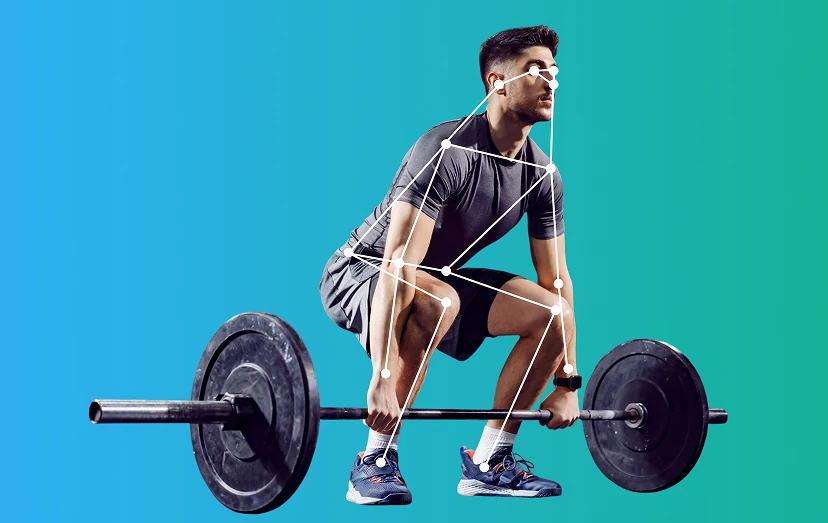
Build AI-Powered Fitness & Sports Apps with Human Pose Estimation
As a Human Pose Estimation (HPE) app development company, MobiDev designs and delivers AI-driven fitness and sports apps with auto-rep counting, exercise recognition, form correction, and personalized coaching logic, helping fitness & sports organizations, startups, and entrepreneurs launch scalable, privacy-conscious AI coach apps.
Build Your HPE-driven App to Unlock AI Coach Benefits
15%
Increase in Revenue Within 1 Year
50%
Decrease in Client Churn
23%
Fewer Injury-Related Clinic Visits
Turn Movement Tracking into Measurable Growth
Build a scalable Human Pose Estimation solution built for retention and premium conversion.

Address Your Unique Business Needs with AI Pose Estimation
Fitness & sports apps
- Build a unique functionality that will make your app stand out in your marketplace.
- Personalize your users training experience and make them stay longer.
- Market HPE as a premium feature to generate additional revenue.
Gyms & Fitness Studios
- Make your services available at any time of the day.
- Win clients who can’t go to gym regularly due to busy schedule.
- Bridge talent gap and decrease the scheduling issues.
Professional Sports Associations
- Make sports accessible to all social groups.
- Decrease safety hazards during trainings of pro athletes and amateurs
- Ensure sports training standards are maintained across the board.
Leverage HPE Power for Your Sports Type
Different sport types require different approaches to using AI Pose Estimation during training. Leverage MobiDev’s expertise in building a feature list that will match perfectly with the sport types of your app.
Strength & Power Sports
Sports: Weightlifting, Powerlifting, Gym-based lifting, Bodybuilding
Sport-Specific Requirements to HPE:
- Object detection of training equipment
- Understanding the context of exercises
- Training safety and injury prevention are critical
Team Field & Court Sports
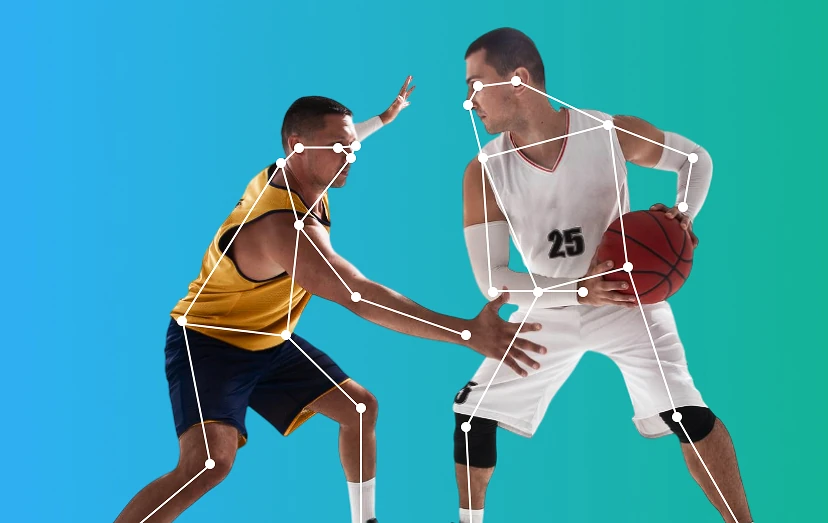
Sports: Association Football, American Football, Basketball, Volleyball
Sport-specific Requirements to HPE:
- Tracking multiple people and the ball simultaneously.
- Identify individual players and what team they’re on
- Bird’s eye view of the field and high-capacity GPU.
Technical & Precision Sports
Sports: Tennis, Golf, Racket Sports
Sport-specific Requirements to HPE:
- Recognition of equipment held in hands and projectiled
- Tracking ball trajectory and adding AR overlay to visualise it
Endurance Sports
Sports: Running, Cycling, Triathlon, Rowing
Sport-specific HPE Requirements & Limitations:
- Finding balance between recording speed and video processing speed
- HPE will best work for drills, for full endurance training wearables are the best option.
Haven’t Found Your Type of Sports?
Talk to MobiDev’s Human Pose Estimation Development Experts
Our Tested Approach to Building HPE-driven Apps
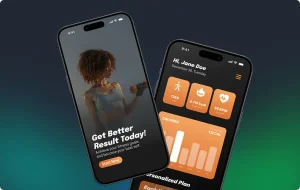


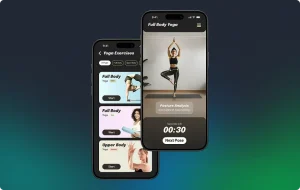
AI Human Pose Estimation Development in Action: Success Stories
Creating a Technical Foundation for a Human Pose Estimation App
We start by establishing a scalable and reliable technical backbone for your real-time AI coach app:
• Designing a scalable Human Pose Estimation architecture tailored specifically for fitness and sports applications.
• Selecting the right technical approach (hybrid, cloud, or on-device) based on product goals, privacy requirements, and device constraints.
• Implementing real-time pose detection and optimized camera pipelines for stable mobile performance.
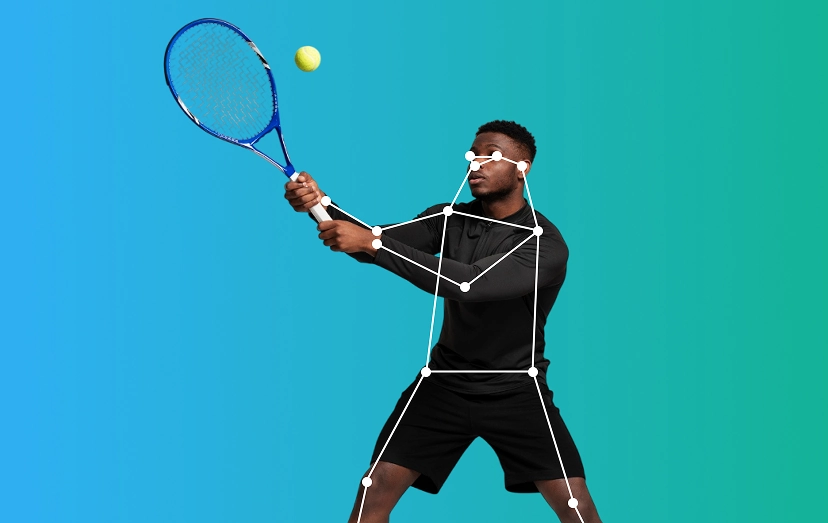
Building Movement Intelligence & Coaching Logic
Then we work on transforming raw pose data into accurate, real-time coaching intelligence.
• Interpreting pose keypoints through a custom-built movement understanding layer.
• Engineering rep counting and phase segmentation tailored to each exercise and camera perspective.
• Defining a structured error taxonomy that translates movement deviations into actionable coaching cues.
• Applying confidence gating to deliver feedback only when the system is certain.
• Designing a coaching engine that provides 2–3 high-signal corrections without overwhelming users.
• Aligning form evaluation and feedback timing with your training methodology to strengthen user trust and retention.

Delivering a Human Pose Estimation App MVP That Drives Results
At this stage we launch an MVP that validates accuracy, engagement, and monetization potential.
• Prioritizing 4–6 foundational exercises to validate tracking reliability in real-world conditions.
• Implementing camera setup guidance to ensure proper framing within seconds.
• Limiting feedback to high-confidence cues to protect user trust.
• Introducing recap metrics such as rep counts, clean reps, and session summaries.
• Validating real-world performance within a 3-month POC or 6-month MVP timeline.
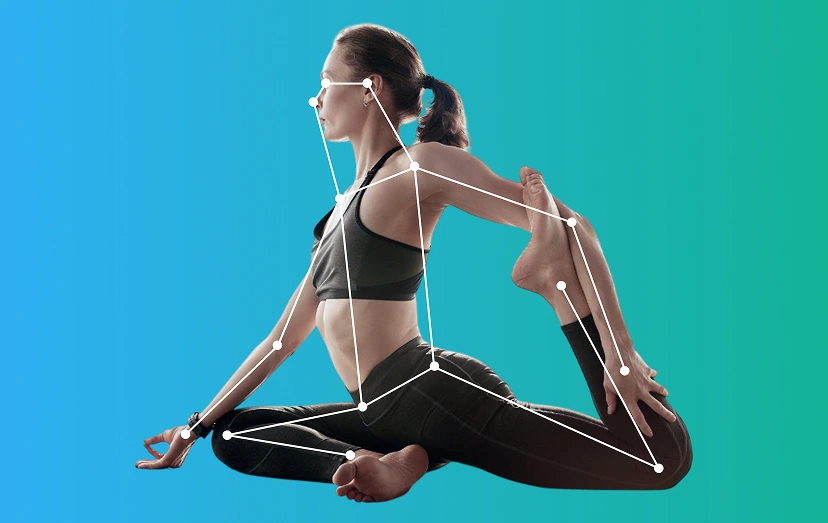
Scaling a Human Pose Estimation App with Data, Personalization & Continuous Optimization
Turning movement tracking into a scalable, data-driven AI coaching platform.
• Monitoring inference performance across devices, OS versions, and usage environments.
• Expanding exercise coverage using structured content and tuning workflows.
• Enhancing personalization logic to adapt plans based on movement quality and adherence.
Turn Movement Tracking into Measurable Growth
Build a scalable Human Pose Estimation solution built for retention and premium conversion.
Use the Best Technologies & Frameworks
for AI Pose Estimation


Choose MobiDev as Your AI Pose Estimation
App Development Company
10+ Years
Building Fitness & Sports Applications
50+
Fitness & Sports Clients
16
Delivered Custom Unique Human Pose Estimation Solutions
8+ Years
Providing AI Consulting & Development services
5 Years
Average Client Retention
9.1 NPS
As of the 2025 Client Survey
91%
Middle and senior engineers on the team
77%
Of clients are from North America and Europe
Turn Movement Tracking into Measurable Growth
Build a scalable Human Pose Estimation solution built for retention and premium conversion.


FAQ
A production-ready HPE MVP should focus on a small set of validated exercises and reliable real-time performance rather than broad feature coverage. The recommended starting scope includes:
- 4–6 foundational exercises such as air squats, lunges, push-ups, planks, and jumping jacks, each with a defined camera view (front or side).
- Exercise-specific rep or hold logic, with 2–3 high-signal form checks and recap metrics.
- A camera setup assistant ensures the user is properly framed within ~15 seconds, including checks for full body visibility, lighting quality, camera stability, and positioning guidance.
- Accurate rep counting logic based on movement phase segmentation using joint angles, velocity, and confidence gating.
- A recap screen showing reps, time, and clean vs. partial reps so users clearly understand performance and improvement areas.
This focused scope allows validation of tracking accuracy, coaching quality, and retention impact within a 3–6 month MVP timeline.
Start with 2D for speed, reliability, and simpler UX, especially for common exercises (squats, lunges, push-ups, plank, jumping jacks). Add 3D only when you have a clear product reason (biomechanics, complex sports drills) and the team to validate it properly.
You should track the following KPIs 90 days after HPE launch:
- camera-permission opt-in
- session completion
- cue acceptance (user agrees/disagrees)
- false-cue reports
- retention by cohort (week-4/week-8)
- conversion to premium, and performance by device/environment (lighting, angles, FPS/latency).
Use phased rollout: internal dogfooding → beta cohort → limited geography/device list → gradually expand. Couple this with feature flags and model versioning so you can roll back quickly if cue quality drops.
Costs depend mainly on architecture (cloud vs hybrid vs on-device), scope (POC vs MVP vs production), and custom features (exercise logic, coaching, personalization, tooling).
- POC (1-3 months): $30k–$75k
Validates pose tracking + 1–2 similar exercises + basic scoring and a demo UX. - MVP (6+ months): $75k–$125k
Typical scope: camera setup assistant, 4–6 exercises, rep counting, 2–3 cues per exercise, recap metrics, basic backend/analytics, device QA. - Production-ready application (12+ months): $150k–$250k
Expanded exercise library, robust QA/evaluation suite, model rollouts, monitoring, content tooling, personalization, privacy/compliance hardening, tune natural feed and timing of voice feedbacks (if applicable)
Plan for continuous work: new devices/OS releases, regression testing on a clip suite, threshold tuning, model updates, and expanding exercise coverage. Even with a strong MVP, you’ll need sustained ML + QA capacity to keep quality stable. Ongoing costs after launch can be around $10k–$80k/month, depending on team size and whether you run cloud inference, how often you update models, and how fast you expand the exercise library.
The biggest cost drivers in HPE application development are:
- Fully on-device real-time across many phones (highest QA/performance effort)
- 3D biomechanics (harder data + evaluation + compute)
- Multi-person / team-sports scenarios
- High privacy/compliance requirements
- Rapid expansion from 5 → 100+ exercises (needs admin tools + tuning workflows)