
AI Fitness App Development Services
Empower your fitness application with AI capabilities to drive engagement and retention with a highly personalized coaching experience.





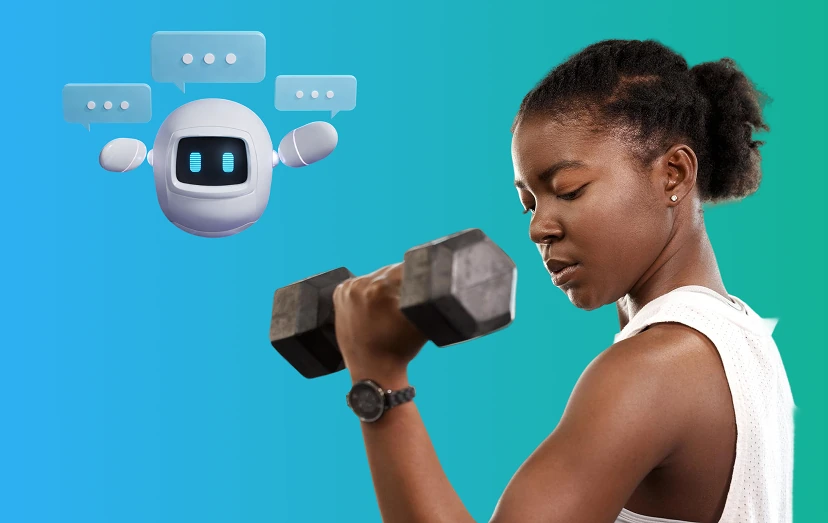
Build an AI-driven Fitness App for Stable Revenue Growth
MobiDev helps fitness brands, gym chains, and fitness tech startups build AI-powered applications that stand out in crowded marketplaces. We use our 8+ years of experience in building AI-driven apps and a proven track record of successful AI fitness app development cases to deliver products that drive retention and revenue. MobiDev’s AI engineering teams cover the full cycle of app development from architecture planning to MVP, launch, integrations, scaling, and long-term maintenance.
Grow Your Business with AI Fitness Product
30%
Revenue Growth within 1 Year
49%
User Engagement 4 Weeks after the Onboarding
20%
More Revenue in Premium Payments per User
Use AI to Address the Unique Product Needs of Your Business
Fitness Applications
- Develop premium AI features that attract new users and retain the existing ones
- Create an ecosystem that turns data from multiple sources into actionable insights
- Stand out from your competitors and become a market leader with a unique offering
Gyms & Fitness Studios
- Create a new member retention program by offering outside-gym training programs
- Get an additional source of revenue to weather seasonal attendance fluctuations
- Add more personalisation to your in-gym training program.
Fitness Startups
- Secure funding for your startup with an exclusive AI-driven feature list.
- Build a strong foundation for your app monetisation from day 1.
- Design your USP around AI to market your application more effectively.
Turn Your AI Fitness App Idea into a Product that Your Clients Use Daily
Build an AI fitness application designed to drive user engagement & retention, with premium features that generate additional revenue.

Personalise Your Users Experience with Smart AI Functionality and Wearables Integration
- Uses AI pose estimation to monitor training
- Provides corrective feedback
- Gives personalized recommendations
Wearable-integrated AI fitness apps
- Track activity in real time
- Monitor health & performance
- Facilitate outdoor training
- Provide conversational coaching
- Adjust workout plans in real time
- Guide users through training sessions.
Boost User Engagement by Offering them Gamification, Virtual Assistants, and Human Coaches
AI fitness gamification apps for user engagement
- Design feedback loops
- Provide rewards for training completion
- Set competition and cooperation modes
AI fitness marketplace apps
- Connect users with trainers and classes
- Use AI for matching and recommendations
- Help coaches train more effectively
AI voice workout assistants for an interactive training experience
- Speech recognition
- Natural language processing (NLP)
- Fitness analytics
Support Your Fitness Programs with Wellness, Mindfullness and Rehabilitation Options
AI nutrition & diet coaching apps
- Provide personalised meal planning
- Track nutrition
- Give insights on meal preparation
AI mental wellness & fitness apps
- Focus on mind-body fitness programs
- Enable mood tracking
- Provide personalised coping tools
AI rehabilitation & injury prevention apps
- Provide guidance on physical therapy
- Help with recovery exercises
- Decrease the training-related injuries
Develop the AI-Driven Feature List that Matches Your Fitness Segment
Depending on your fitness business niche, your app will require different product strategies and AI feature lists. Tap into MobiDev’s expertise to build AI capabilities that match your type of application.
Personal Training & Workout AI Apps
Key Focus Areas:
- AI-generated training plans aligned with your coach methodology
- Automatic weekly plan adjustments based on workout completion
- AI-generated check-in questions and accountability prompts
- Exercise substitutions based on equipment, injuries, or limitations
Strength Training & Bodybuilding AI Apps
Key Focus Areas:
- Auto-progression for weights, reps, and volume
- Plateau detection and deload recommendations
- Exercise substitutions based on available equipment
- Computer Vision for rep Counting & form analysis
Yoga and Mindfulness Fitness AI Apps
Key Focus Areas:
- Posture feedback using camera-based AI pose detection
- Stress-aware content recommendations
- AI coach for daily practice consistency
- Personalized mobility routines for pain points or stiffness
Fitness Club AI Apps
Key Focus Areas:
- Personalized workout plans based on gym equipment availability
- AI recommendations based on attendance history and goals
- Workout suggestions between club or gym visits
- Client progress snapshots for trainers and coaches
Rehabilitation & Corrective Exercise AI Apps
Key Focus Areas:
- Guided recovery plans personalized to condition and stage
- Pain/symptom check-ins with adaptive adjustments
- AI Motion tracking for range-of-motion assessment
- Risk alerts for improper progression
Active Aging AI Fitness Apps
Key Focus Areas:
- Personalized programs adapted to mobility, conditions, and recovery limitations
- Training for balance and fall-prevention with voice or text feedback
- Adaptive training that combines cognitive and physical tasks
- Daily monitoring of activity levels, plan adherence, and risk patterns
Haven’t Found Your Fitness Niche on the List?
Talk to MobiDev’s Fitness App Development Experts

Leverage Our Proven Approach to Building AI-powered Fitness Apps
Make a Strong Technical Foundation for Your AI Fitness App
We design a scalable, secure, and future-ready architecture for your AI fitness product to ensure long-term success for your business.
• Design scalable data pipelines that unify workout, behavioral, biometric, and wearable data to power AI-driven personalization, analytics, and continuous model improvement.
• Develop a cloud-native or hybrid architecture aligned with your business goals and growth plans.
• Choose the right tech stack to support AI capabilities, mobile performance, and cross-device compatibility.
• Ensure data security and privacy, compliance, and system performance by design.
• Integrate wearables, health data platforms, sensors, and third-party APIs into one ecosystem powered by AI.
• Create a modular infrastructure that supports fast iteration, feature expansion, and ongoing AI improvements.
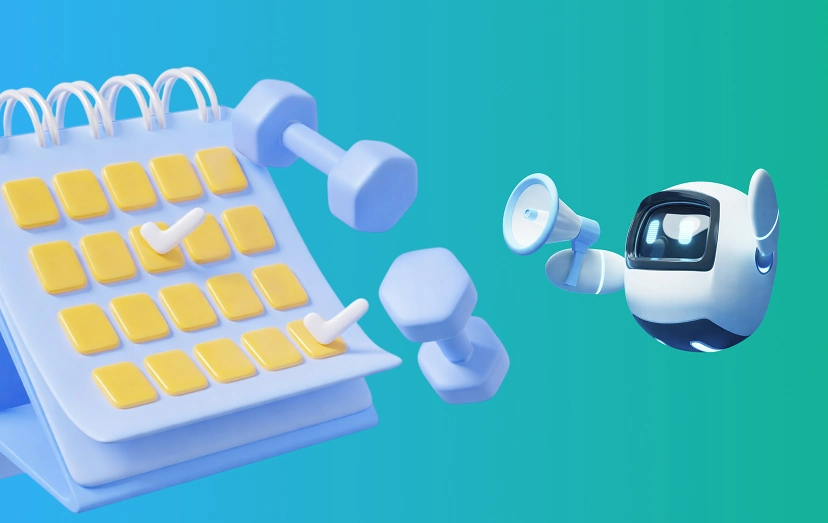
Create Intelligent AI Coaching and Engagement Experiences
We turn AI fitness app functionality into meaningful user experiences that support engagement and retention. Your AI app will be able to:
• Develop adaptive training plans based on user goals, fitness level, progress, and behavioral patterns.
• Track workouts & regular activities, count reps, analyse user motion, and monitor training performance.
• Personalize app content based on data from multiple sources, such as wearables, self-reports, and computer vision.
• Create complex personalised gamification experiences, such as streaks, milestones, challenges, and rewards.
• Provide feedback that motivates users while keeping the experience clear and manageable.
• Incorporate your brand methodology into the AI-driven coaching logic to strengthen trust and long-term loyalty.
Launch an MVP That Proves the App’s Retention and Monetization Potential
We help you release a focused AI fitness product that validates demand and demonstrates business value:
• Prioritize the features that best support engagement and validate your core value proposition.
• Design smooth onboarding flows that help users reach value faster.
• Implement subscription models, paywalls, premium AI coaching features, and gated functionality.
• Set up analytics dashboards to track retention, churn, LTV, and feature adoption.
• Get POC in 1-3 months, custom ML MVP in 3-9 months depending on your project scope and complexity.
• Validate product-market fit through a rapid 10-day MVP launch approach.
Scale Your AI-driven Fitness Platform with Data & Continuous Optimization
We help you scale your fitness product and optimise its performance as your user base grows:
• Expand workout libraries, wellness content, and sport-specific coaching experiences.
• Improve AI recommendations, predictive analytics, and progress insights over time.
• Add advanced capabilities such as Computer Vision, voice interfaces, Augmented Reality, and sensor-driven features.
• Expand integrations to build a connected fitness, wellness, and health ecosystem.
Outsourced Fitness App Development in Action: Success Stories
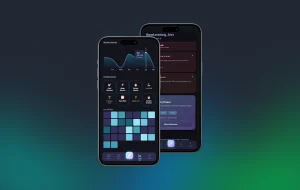


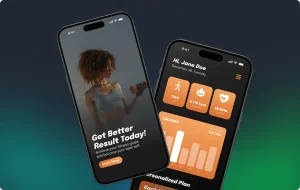
“MobiDev is clearly an impressive organization. Everything from communications, UI/UX, mobile app development, and management skills to strategy and understanding the zeitgeist of technology development, MobiDev has it all.”

Scott Deans
Founder & CEO at BeONE Sports
Choose MobiDev as Your AI Fitness App Development Company
10+ Years
Building Fitness Applications
50+
Fitness
& Sports Clients
16
Delivered Custom Unique Human Pose Estimation Solutions
8+ Years
Providing AI consulting
& development services
5 Years
Average Client Retention
9.1 NPS
As of the 2025 Client Survey
91%
Middle and senior engineers
on the team
77%
Of clients are from North America and Europe
Tap into MobiDev’s AI Expertise to Build AI-Driven Fitness App


FAQ
Standard fitness app development services can be just about building a digital notebook with a video player. An AI app actually watches and reacts to the user. You aren’t just building screens but writing active logic. Your engineers have to build computer vision pipelines to catch bad form, predictive math to adjust weights mid-set, and backend engines that completely rewrite the workout on the fly if the user starts failing reps.
Scope dictates the timeline. If you just need a Proof of Concept (PoC) to prove your tracking math actually works, figure 1 to 3 months. Polishing that into an MVP you can put in the app store takes 6 to 9 months. Pushing for a massive platform with fully custom models? That is a 12-month minimum engineering sprint.
Keep it brutally focused. Pick just one AI feature that directly drives subscriptions — maybe an adaptive workout engine or some basic camera-based form correction. You need hard proof that people will pay for that specific tool before burning your runway on advanced motion analytics and heavy infrastructure.
You don’t need a massive data lake to start. Most version one releases just run on hardcoded, rule-based logic and basic onboarding questionnaires. Building complex data infrastructure before you even have active users is a waste of budget. Just get the app live. As actual humans start using it, the backend pulls real workout logs and wearable feeds. That organic data is exactly what your engineers will use later to train custom models and dial in the accuracy.
You need features that prove the app is actually paying attention. People stick around for adaptive plans that lower the intensity when they are fatigued, or live form corrections that feel accurate. When users see the system dynamically adjusting to their specific progress, churn drops drastically.
If you need ultra-low latency — like live rep counting or instant pose correction — run it on-device so the feedback doesn’t lag. If you are crunching heavy historical data, generating personalized plans, or running LLM agents, push that to the cloud. Most solid platforms use a hybrid approach.
Yes. The phone’s camera is often enough for baseline motion tracking, and users can just log their history manually. Apple Watches and Garmins definitely give you much cleaner biometric feeds, but for a version one release, they are totally optional. Don’t block your MVP launch waiting for complex Bluetooth integrations.
You are pulling live video frames and biometric feeds. If you leak that, you are dead in the water. Security has to be baked into the backend from day one. That means setting up rigid data pipelines, end-to-end encryption, and tight access controls. Cutting corners on infrastructure here just invites massive lawsuits.
Your marketing copy actually dictates this. If you just track workouts, you mainly worry about GDPR in Europe and CCPA in the US. But the second your app claims to “prevent injury” or act as physical therapy, you cross into medical territory. In the US, that means strict HIPAA compliance and a whole different level of backend security.
Sure. You can wire a custom AI app directly into a gym’s existing CRM, MINDBODY account, or class scheduling software. It is a great way for brick-and-mortar studios to assign “digital homework” and track their clients’ progress when they aren’t physically in the gym.
It is the core engine for any form correction. Without computer vision, your app is just a stopwatch. CV processes the live video feed to map joint angles, count the actual reps, and flag bad posture mid-set. If your product relies on checking yoga poses or barbell squats, this is the exact tech you need.
It is your best upsell tool. Basic rep logging is free, but you lock the live AI form correction, deep analytics, and adaptive plan generation behind a high-ticket premium paywall. Plus, the backend data tells you exactly which features keep users coming back, so you know what to focus on for your next marketing push.
You own it all. When you sign a custom development agreement, the entire proprietary codebase, your unique scoring logic, and the final IP belong completely to your business. The only things you don’t own are the base external frameworks, like MediaPipe or OpenAI APIs, which run on their own standard licenses.
You look at cold, hard business metrics. Are users completing onboarding? Is the churn rate dropping? Are people actually converting to the premium AI tier? On the technical side, you track exactly how often the AI gives a bad recommendation or miscounts a rep, and you patch the logic accordingly.
Yes, but you need a highly modular backend architecture. The tracking math for a heavy deadlift is completely different from the tracking math for a yoga pose. Your data models and personalization logic must be built flexibly from day one to handle those totally different user journeys.
You stop guessing and start looking at actual user data. The post-launch phase is entirely about fixing edge-case bugs in your AI logic, refining your monetization funnels, and seeing exactly where users drop off. This raw field data dictates exactly what you build next.
Your budget comes down to developer hours. Testing the waters with a basic PoC will run roughly $17,000 to $20,000. Stepping up to a stable, launch-ready MVP pushes the bill to the $40,000–$50,000 range. If you want the full package with custom logic and live wearable integrations, budget well over $100,000 to $200,000+.