
Athletic Performance Analysis Platform Development
Drive user acquisition and retention with a new AI-driven feature that enables athletes to train more safely and efficiently.





Build an AI Feature that Brings Tangible Business Results
15%
Revenue Growth Within 12 Months
50%
Increase in User Retention
23%
Fewer Injury-Related Clinic Visits
Turn Athlete Data Analysis into Measurable Growth
Build a scalable AI Pose Estimation solution designed for retention and premium conversion.

Attain Your Goals with Athletic Performance Analysis Platform
Sports Tech Startups
- Build a product with a defensible value proposition for investors
- Enter the fast-growing market with a competitive product
- Get monetization opportunities from the start
Sports Applications
- Attract new users with a feature they will use in every training
- Grow your revenue with a new premium offering
- Get ahead of your competitors in a tight market
Professional Sports Associations
- Improve training safety for both amateur and professional athletes
- Create an app that ensures adherence to sports standards
- Make your association more impactful to the members
Develop Athlete Performance Analysis for Your Sports Type
Individual Form-Focused Exercises
Sports: most types of sports
Key Characteristics:
- Best for athlete drills and pose correction
- The camera is fixed and records a single user
- The easiest type of athlete performance analysis
Team Ball Sports
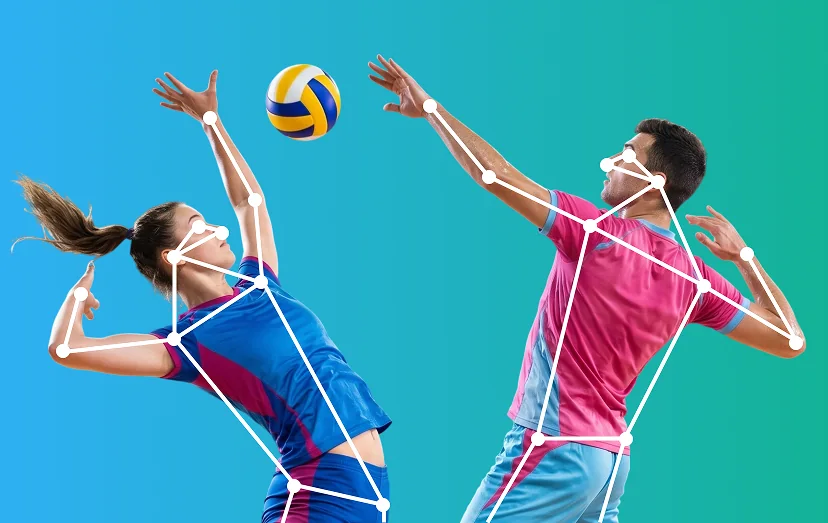
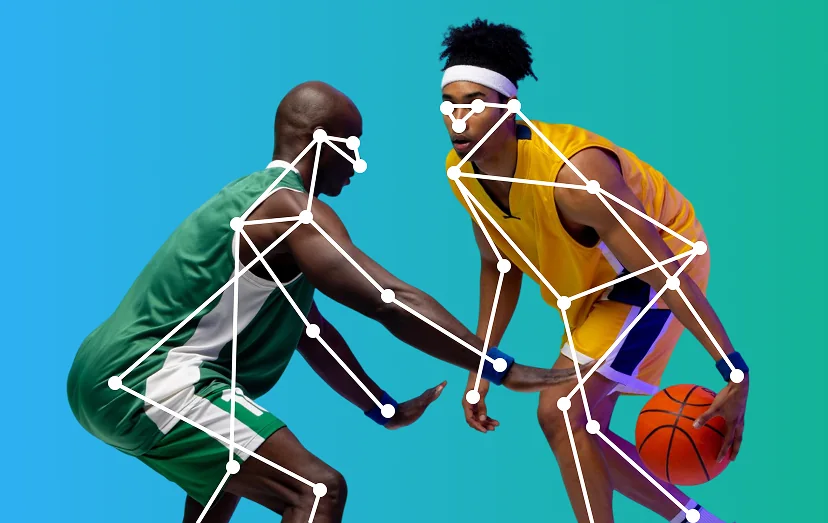
Sports: American Football, Basketball, Association Football, Volleyball
Key Characteristics:
- Best for general game analysis rather than individual drills
- Tracks many players and a ball at the same time
- Not fit for the analysis of the poses of individual athletes
Swing-Based Precision Sports
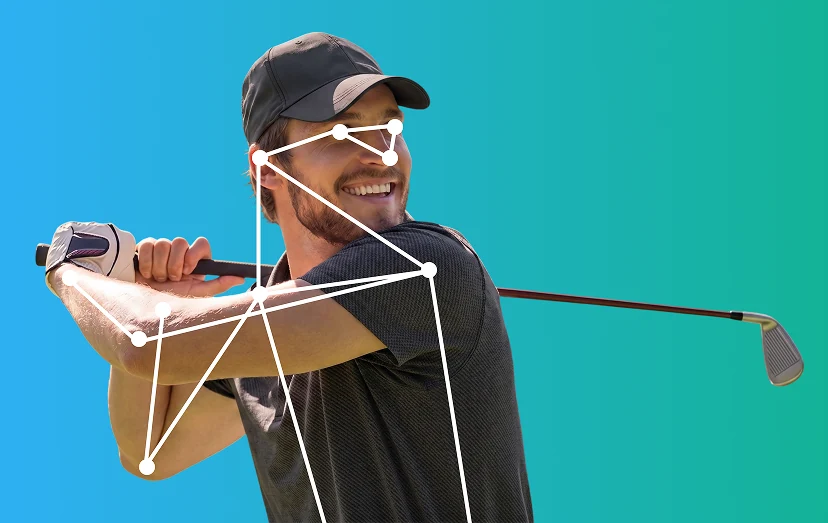
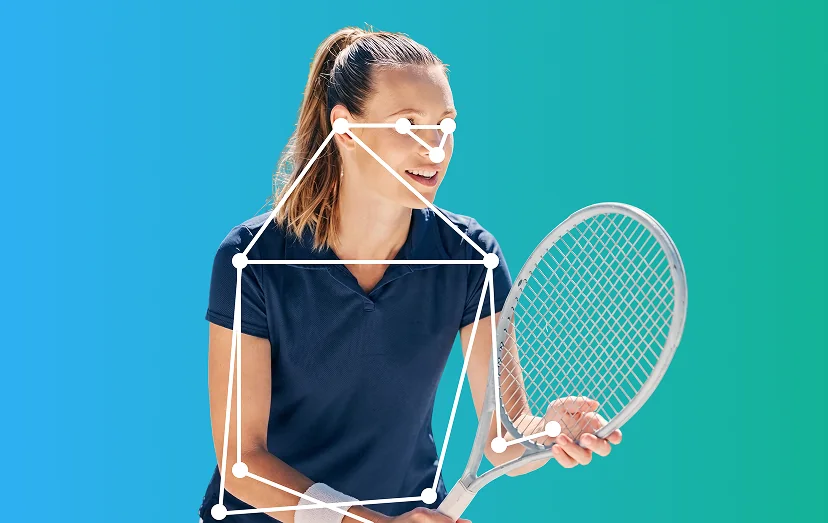
Sports: Racket Sports, Tennis, Golf
Key Characteristics:
- Best for pose estimation and correction in individual athletes
- Recognizes and analyzes the body, the ball, and the equipment
- Tracks the trajectory of the ball and gives feedback
Haven’t Found Your Type of Sports?
Talk to MobiDev’s Experts in Athletic Performance Analysis Platform
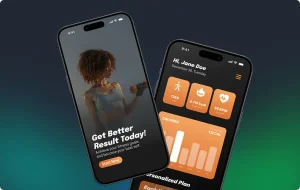
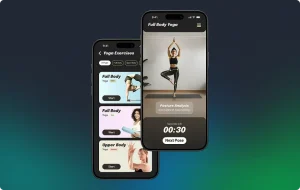
Success Stories Athletic Performance Analysis Platform


Choose MobiDev as Your Partner for Athletic Performance Analysis Platform Development
10+ Years
Building Fitness & Sports Applications
50+
Fitness & Sports Clients
16
Delivered Custom Athletic Performance Analysis Apps
8+ Years
Providing AI Consulting & Development services
5 Years
Average Client Retention
9.1 NPS
As of the 2025 Client Survey
91%
Middle and senior engineers on the team
77%
Of clients are from North America and Europe
Use the Best Technologies & Frameworks
for Athlete Pose Estimation


Build AI-Powered Athletic Performance Platforms
What is Athletic Performance Analysis?
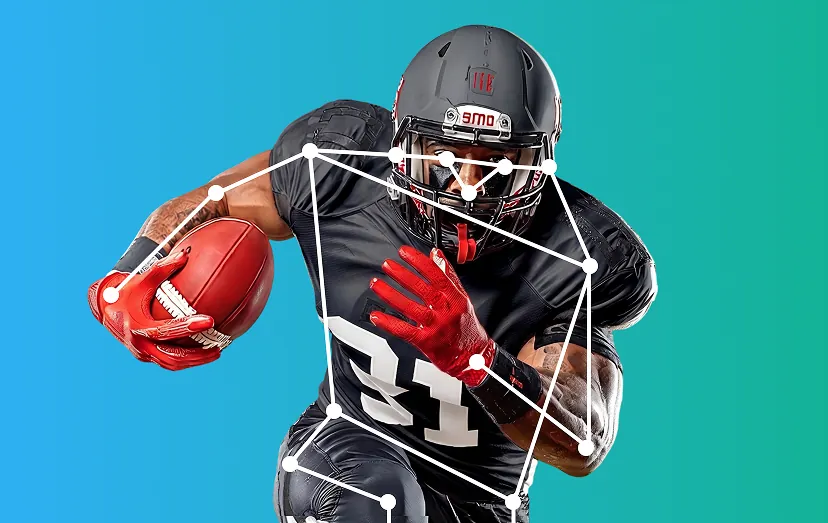
AI Movement Analysis is computer vision technology that tracks human movement through a standard smartphone camera. You do not need hardware sensors, wearables, or physical markers on the body. The AI processes the live video feed and translates raw motion into hard data.
This Video-Based Performance Analysis turns standard camera feeds into actionable metrics. We use it to evaluate an athlete’s technique, measure execution speed, and give coaches actual numbers instead of guesswork.
MobiDev builds the underlying architecture for any Athletic Performance Analysis Platform. We engineer the motion tracking, exercise recognition, and custom coaching logic so sports organizations, fitness companies, startups, and product teams can launch a reliable scalable product.
The Technical Foundation for Performance Analysis
Processing live video feeds is heavy computational work. We start by building an infrastructure that can actually handle the load.
Architecture choice. We look at your latency requirements and privacy constraints to decide where the math should happen. Sometimes the AI models need to run locally on the device. Sometimes a hybrid or cloud architecture makes more sense.
Camera pipelines. We build optimized pipelines that keep the tracking stable across different mobile and web environments.
Scalable backend. The infrastructure has to handle real time data streams flawlessly before you even think about building user profiles or advanced analytics dashboards.
Developing Movement Intelligence
Raw tracking data is useless without context. We build a logic layer that interprets what the body is actually doing. The system analyzes range of motion, balance, speed, and joint alignment. Then we map that data against the specific rules of a sport or exercise.
If a user’s form breaks down, we use a structured error taxonomy. This translates a specific physical deviation into a clear coaching cue. We also build in strict confidence gating.
If the camera angle is terrible and the AI is not absolutely sure what it is seeing, it stays quiet. We protect user trust by never delivering false feedback. The timing of this feedback is engineered to match your specific coaching methodology.
Launching the Athlete Performance MVP
Do not try to track every movement in a sport on day one. We launch an MVP specifically designed to validate tracking accuracy and user engagement.
Strict limits. We limit the first build to four to six core exercises. That is exactly enough to prove the computer vision models actually work in messy training environments.
User guidance. We build UI guidance to guide users to frame the camera correctly. The system actively checks for full-body visibility, lighting quality, camera stability, and proper framing before it even starts analyzing.
Core metrics. The first version delivers essential data like clean rep counts, movement quality scores, and session summaries.
Clear timelines. We usually launch a working proof of concept in three months or a market ready MVP in six. You test this directly with real athletes to validate the math.
Scaling the Athletic Performance Analysis Platform
Once real users get their hands on the app, you will hit edge cases. Bad lighting conditions, weird camera angles, and older operating systems will test your models. We monitor the inference performance across all these variables to keep the tracking stable.
Once the core loop is validated, we expand the platform. We broaden the library of supported exercises and build out the coach dashboards to track long term progress. We also introduce deep personalization based on an athlete’s training history and goals.
We constantly feed real world data back into the models. This continuous data evaluation ensures the tracking accuracy improves every single month as your platform grows.
FAQ
Do not try to build a platform that tracks everything. A strong MVP focuses on doing a few things perfectly.
You need four to six foundational movements. Pick squats, lunges, or specific sports drills. You need a camera assistant that helps the user frame themselves correctly within 15 seconds. It must automatically verify full-body visibility, lighting quality, camera stability, and proper framing. Then you add basic rep counting and two or three high-confidence technique checks per movement.
The goal of the MVP is to prove the math works and users actually care. If you can validate those two things in three to six months, you have a product.
Start with 2D. It is faster to build, easier to validate, and works perfectly for 90% of sports use cases. It handles controlled camera angles for exercises like push-ups and jump analysis without heavy computational overhead.
3D tracking is only necessary if you are doing deep biomechanical analysis or complex sports reconstruction. It requires more data, heavier validation, and significantly higher development costs. Single camera 3D pose estimation is incredibly difficult to get right. If you actually need 3D, you usually have to introduce multiple cameras or LiDAR.
Start with 2D. You can always add 3D later if the business case actually demands it.
You need to know if people trust the AI. Track your camera permission opt in rates first. If users do not give you access, the feature is dead. Then look at the first session completion rate, week four retention, and premium conversion rates to see if the tool actually drives revenue.
You also have to track the technical metrics alongside the business ones. Monitor performance by device, lighting conditions, and FPS. The most important metric is your false feedback report rate. If the AI is giving bad advice, users will abandon the platform immediately.
Never push a heavy computer vision feature to your entire user base at once. Start with a closed beta. Release it to a small cohort based on device type or geography. You must use feature flags so you can kill the feature instantly if the models start hallucinating.
You also need strict model and logic versioning. If an update degrades the tracking quality, you must be able to roll back to the previous stable version immediately. Monitor the rollout for crashes, latency spikes, and low confidence results. You scale up the release only when the tracking logic proves stable in real-world training environments.
It depends entirely on your scope and architecture.
- POC ($30k to $75k): A proof of concept takes one to three months. It validates the core motion tracking on one or two movements to see if the idea is even possible.
- MVP ($75k to $125k): This gets you a camera assistant, four to six supported movements, rep counting, basic backend logic, and device testing. It is ready for early users.
- Production-ready platform ($150k to $250k+): This includes a large movement library, advanced coaching logic, model monitoring, privacy hardening, and optimized feedback delivery.
The final budget always comes down to whether the system runs on the user’s device or in the cloud.
The real work starts after you ship. Apple and Android constantly release new hardware and OS updates. You have to test the camera pipelines against all of them. You also have to monitor real-world latency and review false feedback reports to tune the movement logic.
After launch, ongoing costs usually range from $10k to $80k per month. That depends on your cloud inference bills, how often you update the AI models, and how aggressively you want to expand the exercise library.
Complexity and real-world testing. Running real-time processing on older phone models is incredibly expensive to engineer. Trying to track a fast-moving ball or multiple athletes on a court multiplies the difficulty.
The highest hidden cost is usually testing. You have to validate the models across different lighting conditions, camera angles, and body types. The more chaotic the sports environment, the more effort it takes to deliver trustworthy results.
A sport is a good fit if the performance can be judged visually. If the coach looks at rhythm, range of motion, and execution consistency, computer vision can track it. Individual drills, repetitive movements, and exercises with clear start and end phases are perfect candidates.
Team sports, heavy contact scenarios, and multi-athlete tracking are much harder. They require advanced architecture and serious GPU capacity.
Yes. You do not have to rebuild your entire product. We can integrate the movement analysis as a new camera based training mode inside your current app. We hook it into your existing user profiles and subscription logic. This is usually the smartest approach because it gives your current users a powerful new premium feature without forcing them to download a separate application.
Live analysis is for real time coaching. It counts reps and gives instant correction. This is perfect for fitness apps where the user needs immediate feedback mid workout.
Recorded video analysis is for deep review. It is used by coaches for swing analysis and performance comparison. The system has more time to process the video so the insights can be much deeper. Pick one for the MVP. Do not try to build both until you validate user demand.
You need a clear definition of the rules. We need a list of the exact exercises and the target camera angles. We need videos of correct technique and videos of common mistakes. We also need to understand your specific coaching methodology so we know exactly what output metrics you expect.
You do not need a massive proprietary dataset to start. We use public data and internal testing to build the POC, then collect real structured data to tune the models later.
Internal demos are not enough. You have to test the models with different body types, skill levels, and movement speeds. You must run regression tests against a library of specific videos to see if an update breaks the logic.
Compare the AI output directly against a human coach. The goal is to confirm the AI gives the exact same advice a professional trainer would give.
You design the system to shut up when it is not sure. We use strict confidence gating. If the camera angle is bad or the lighting is too dark, the AI delivers zero feedback. It is always better to give two accurate coaching cues than five uncertain guesses. We also prioritize major form corrections over minor details to keep the user focused.
Yes. For the athlete, the app delivers real time feedback, rep counts, and progress tracking. For the coach, it acts as a management dashboard. The coach can see session histories, movement quality trends, and team completion data. This dual approach makes the product highly valuable for professional sports organizations.
Athlete Performance Analysis creates measurable value. You put the real time movement feedback and advanced performance reports behind a paywall. Standard users get basic workout plans.
Premium users get an AI coach that watches their form and gives personalized improvement plans. Users will pay for a feature that makes their training safer and more effective.
You are processing video of people in their homes and gyms. Privacy is critical. You have to decide if the video is processed locally on the phone or sent to the cloud. If it goes to the cloud, you must decide if it is stored or deleted immediately after analysis. You have to navigate GDPR, health data regulations, and specific sports association rules. A privacy first architecture is a major competitive advantage in this space.
Yes, but do not start there. Tracking a golf club, a tennis racket, or player spacing on a basketball court requires high-quality video and massive GPU capacity. You need advanced computer vision models trained on very specific sport data. Keep this off your MVP roadmap. Build the single athlete tracking first.
Investors want to see proprietary logic tied to hard business metrics. Your defensibility comes from a sport specific movement engine that no one else has. It comes from proprietary datasets and validated improvements in user retention. The strongest pitch connects your complex AI architecture directly to revenue growth and premium subscription conversions.