
AWS Cost Optimization for a High-Load Fitness Platform: Scaling AI Coaching While Cutting Cloud Spend by 45%
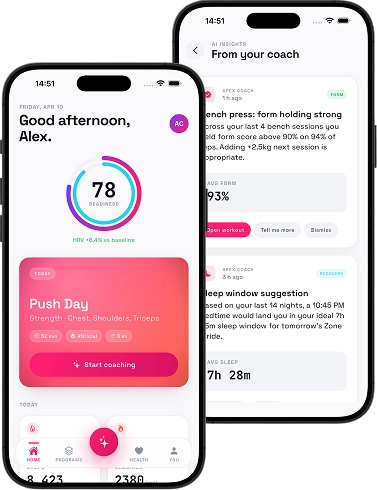
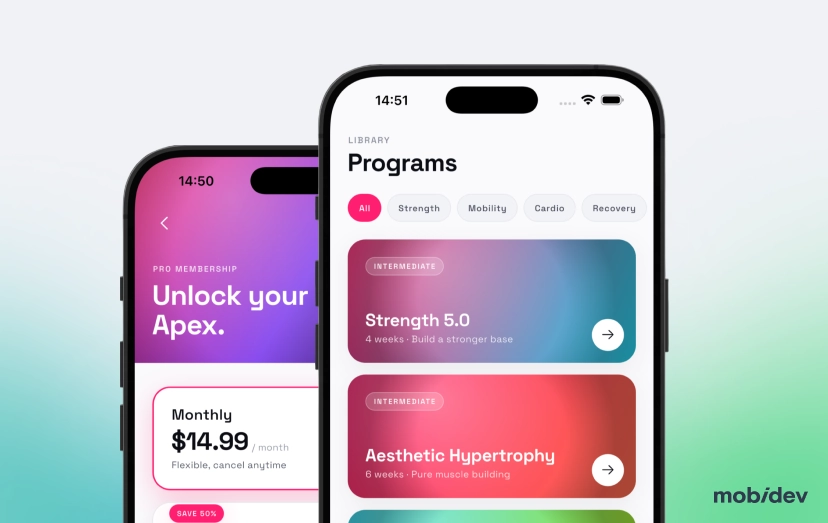
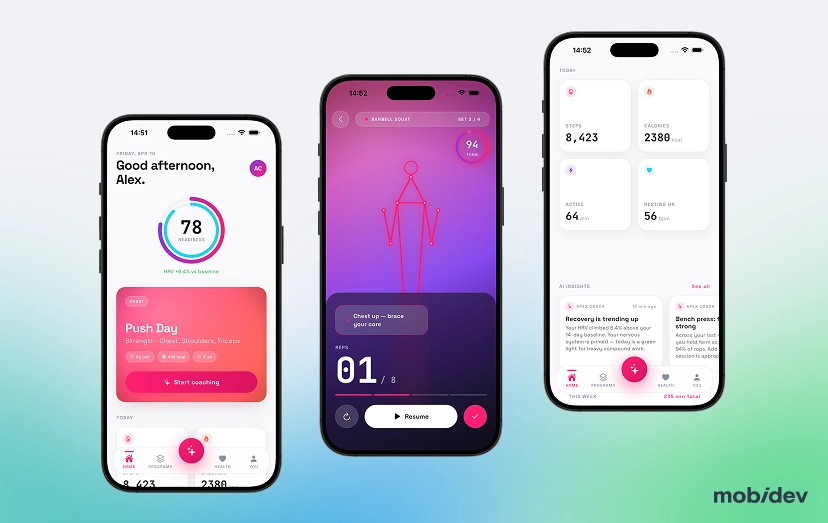
A US-based fitness startup experienced explosive growth, successfully capturing a massive user base with a mobile-first platform. Their core offering combined highly personalized subscription-based workout programs, real-time wearable integrations (Apple HealthKit, Google Fit), and premium AI-powered coaching that utilized Human Pose Estimation (HPE) and Generative AI for real-time form feedback.


The Story Behind: From COVID MVP to High-Load Platform
As the platform scaled to roughly 500,000 Monthly Active Users (MAU) and 180,000 Daily Active Users (DAU), the business encountered a common scaling paradox: their cloud infrastructure and AI API costs were growing exponentially faster than their revenue.
The original architecture did exactly what an MVP should do: it validated the market and enabled rapid growth. However, what gets a product to its first 100,000 users rarely supports half a million. Under the weight of high-concurrency peak workout hours, the MVP infrastructure became strained. Users experienced latency in real-time sessions, and the monthly AWS bill became highly unpredictable.
To resolve this, the company partnered with MobiDev’s Tech Consulting team to audit the infrastructure, stabilize performance, and implement a robust, enterprise-grade cloud and AI cost optimization strategy.
Business value
Within months of our consulting engagement, the platform achieved a 45% overall reduction in AWS cloud spend. We transformed their infrastructure from an unpredictable, monolithic expense into an elastic, edge-cloud hybrid system where costs scale linearly and predictably with active user sessions.
Simultaneously, we resolved critical performance bottlenecks. Real-time feedback latency was reduced to sub-millisecond levels, and timeouts during wearable data synchronization were entirely eliminated. This protected the company’s profit margins while directly enhancing the user experience, driving higher subscription retention rates.
Project Scope & Deliverables
MobiDev executed a comprehensive Software and Architecture Audit to diagnose the bottlenecks of this high-load fitness platform. We identified several culprits driving up the cloud bill:
1. Sub-optimal Edge AI Architecture: While the MVP utilized some basic on-device processing, it still relied on sending bloated, high-frequency coordinate streams—and periodic media snippets for validation—to the cloud, causing unnecessary bandwidth and GPU costs.
2. LLM Token Waste: The app relied exclusively on massive, premium arge Language Models (LLMs) for all dynamic coaching feedback, heavily inflating API costs.
3. Hidden FinOps & Observability Leaks: Terabytes of orphaned storage, unoptimized network routing, and massive log ingestion volumes were silently inflating monthly invoices.
4. Database Strain from Wearables: High-frequency, time-series telemetry from wearables was being dumped directly into the primary relational database.
We engineered a phased migration to a scalable, hybrid architecture, maximizing vision processing at the edge (mobile), implementing smart LLM routing, and building event-driven data pipelines.
How We Delivered: Proven Architecture Patterns for Fitness Apps
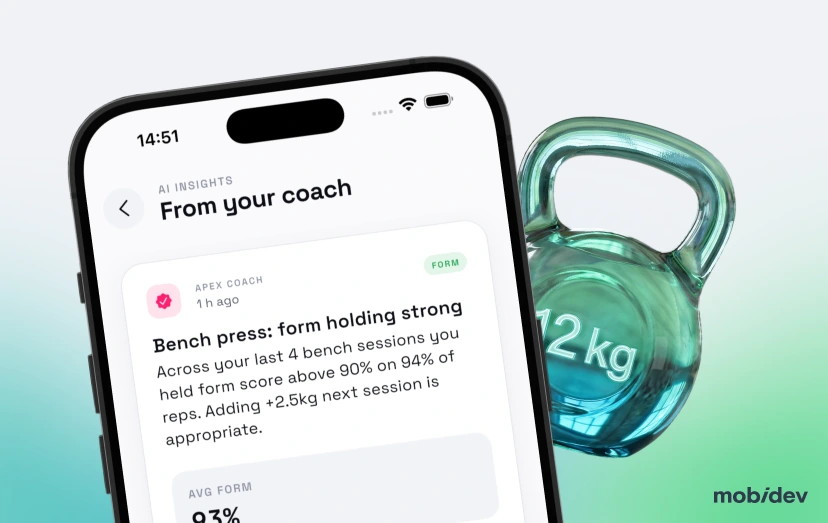
Maximizing Edge-to-Cloud AI: Decentralizing Human Pose Estimation
Issue: MVP relied heavily on the cloud, sending unoptimized data streams and periodic media snippets to AWS.
Solution: We fundamentally optimized the Edge-to-Cloud approach. by upgrading the local capabilities through implemention of advanced, lightweight HPE models.
Read more details in FAQs below
Generative AI Routing: LangChain Optimization
Issue: The MVP relied entirely on a single, expensive, high-parameter LLM
Solution: We implemented dynamic model routing using LangChain. We classified AI tasks by complexity.
Read more details in FAQs below
Plugging Hidden Storage, Network, and Observability Leaks
Issue: High-load mobile apps generate massive amounts of telemetry.
Solution: We implemented several “zero-friction” FinOps strategies to stop passive billing leaks.
Read more details in FAQs below
Core Compute Modernization (EKS & Graviton)
Issue: High-concurrency morning and evening workout windows
Solution: We migrated the legacy monolithic backend to a microservices architecture orchestrated by Amazon EKS (Elastic Kubernetes Service).
Read more details in FAQs below
Smart Data Engineering for Wearables
Issue: Wearable integrations were overwhelming the MVP’s PostgreSQL database. Every heartbeat and rep count created a bottleneck.
Solution we implemented decoupling telemetry and leveraged Amazon Redshift Specturm.
Read more details in FAQs below
Tech Stack
Key Takeaways for CTOs
Scaling a fitness application requires moving beyond brute-force cloud computing. By maximizing heavy vision processing at the mobile edge, implementing dynamic LangChain routing to avoid LLM token waste, and plugging hidden cloud FinOps leaks, fitness platforms can successfully support massive concurrent user bases while maintaining strict, highly profitable unit economics.
Optimize Your Fitness App Cloud Costs with MobiDev!
Fill out the form and share your vision for AI Fitness Coach. Our experts will get back to you within 1 business day.
FAQ
The Problem:
The most significant cloud compute and network cost center was the AI coaching pipeline. The MVP architecture performed rudimentary local processing (like keyframe extraction) but still relied heavily on the cloud, sending unoptimized data streams and periodic media snippets to AWS for form validation on expensive GPU instances.
The Solution:
We fundamentally optimized the Edge-to-Cloud approach. We upgraded the local capabilities by implementing advanced, lightweight HPE models (like MediaPipe Pose and Apple Vision framework) to run entirely on the user’s mobile device. The mobile app now not only extracts skeletal landmarks but also computes the mathematical embeddings and joint angles locally.
Instead of streaming continuous, heavy telemetry to the backend, the app now streams only highly compressed, state-change embeddings (a tiny JSON payload) exactly when a form correction is needed. The backend quickly matches this minimal coordinate data against proper form templates and returns a coaching trigger.
The Impact:
By maximizing edge computing, we achieved an 85% reduction in real-time data payload transfer, eliminated the need for heavy cloud GPUs for continuous tracking, and dropped perceived feedback latency to near-zero.
The Problem:
To generate conversational voice feedback and personalized workout summaries based on the user’s data, the MVP relied entirely on a single, expensive, high-parameter LLM (e.g., GPT-4). Using a premium model to simply tell a user to “squat a little deeper” was massive overkill and drove up token costs.
The Solution:
We implemented dynamic model routing using LangChain. We classified AI tasks by complexity. Simple, high-frequency tasks (like generating real-time motivational nudges based on the HPE embeddings) are now automatically routed to smaller, faster, and vastly cheaper models (like Claude Haiku or a fine-tuned Llama 3 8B). The premium, heavy LLM is reserved strictly for complex, high-value tasks, such as generating the user’s comprehensive weekly workout progression plan.
The Impact:
This architectural smart-routing slashed generative AI token costs by 60% while simultaneously decreasing the time-to-first-byte (TTFB) for real-time audio coaching.
We implemented several “zero-friction” FinOps strategies to stop passive billing leaks:
- Serverless Log Filtering (CloudWatch Optimization): High-frequency AWS Lambda functions were dumping verbose INFO and DEBUG logs directly into Amazon CloudWatch. We deployed a lightweight Lambda Extension (agent) to intercept and filter telemetry before it leaves the execution environment. By routing only critical ERROR and WARN logs to CloudWatch, we reduced log ingestion volumes by an astonishing 85%.
- Aborting Incomplete Multipart Uploads: S3 retains incomplete data chunks when users drop cellular connection during post-workout media uploads. We implemented an S3 Lifecycle Rule to automatically delete incomplete multipart uploads after 7 days, instantly reclaiming terabytes of wasted storage.
- VPC Gateway Endpoints: By configuring VPC Endpoints, we routed static assets and media directly to S3 over the AWS private network. This bypassed expensive NAT Gateway data processing charges, cutting data transfer costs by over 60%.
- We implemented Karpenter for dynamic, just-in-time node provisioning, allowing the cluster to scale rapidly during rushes, and scale down to near-zero at night.
- We migrated the core backend APIs to AWS Graviton processors (ARM-based), immediately yielding an estimated 20–30% price-performance improvement over standard x86 architectures.
- Decoupling Telemetry: We redirected the high-velocity, real-time telemetry data through Amazon Kinesis into Amazon DynamoDB, which handles high-throughput, key-value data with single-digit millisecond latency.
- Data Lake Analytics: For long-term user progress tracking, we built a data lake solution routing historical data to S3. By leveraging Amazon Redshift Spectrum, the client’s data science team can now run complex analytical queries directly against the data in S3 without paying for massive, persistent Redshift cluster storage.