Modernizing a Hospitality Marketplace: A Scalable Platform Got $35M in Investment After the Upgrade
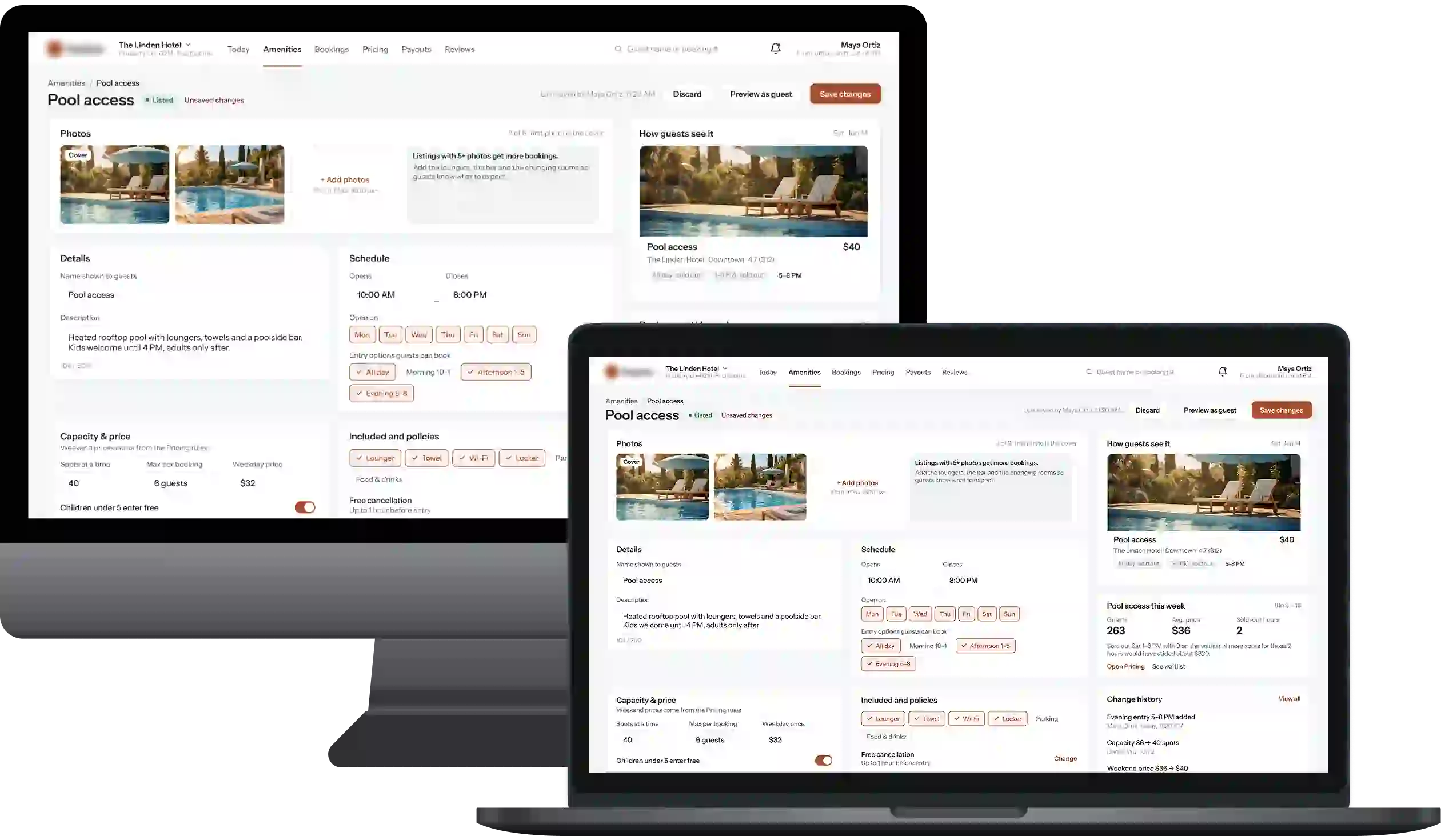
A US hospitality marketplace [name under NDA] helps hotels earn from their pools, spas, and other amenities by selling day access. As it grew, technical debt slowed development and scaling, and the platform had to be modernized without pausing the marketplace.
Over 3 years, MobiDev audited the platform, modernized the React frontend and design, and reworked the Ruby on Rails backend in iterative cycles, while the client built its in-house team alongside ours. Since the upgraded platform launched, the client has raised $35M.


The Story Behind the Marketplace Modernization
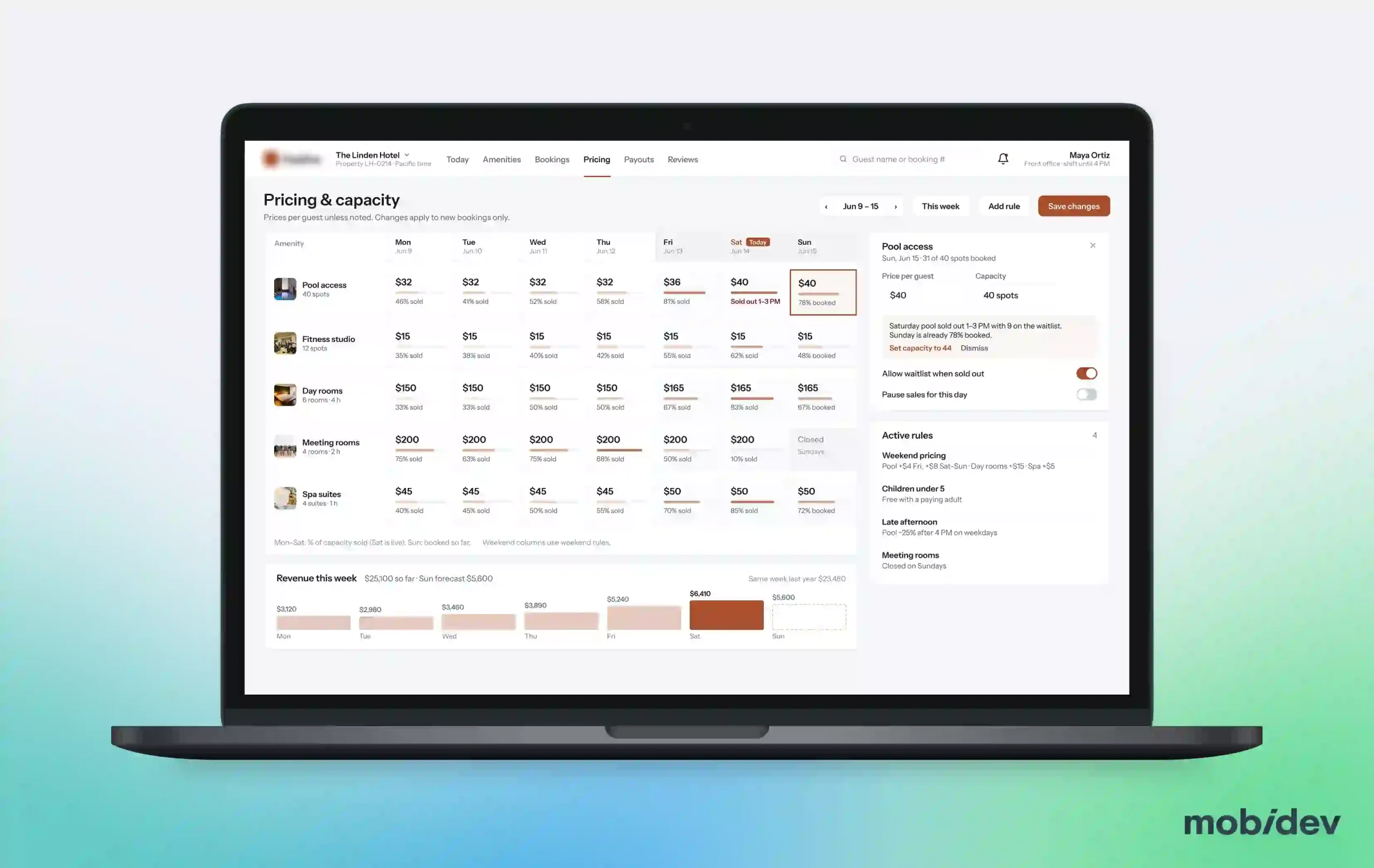
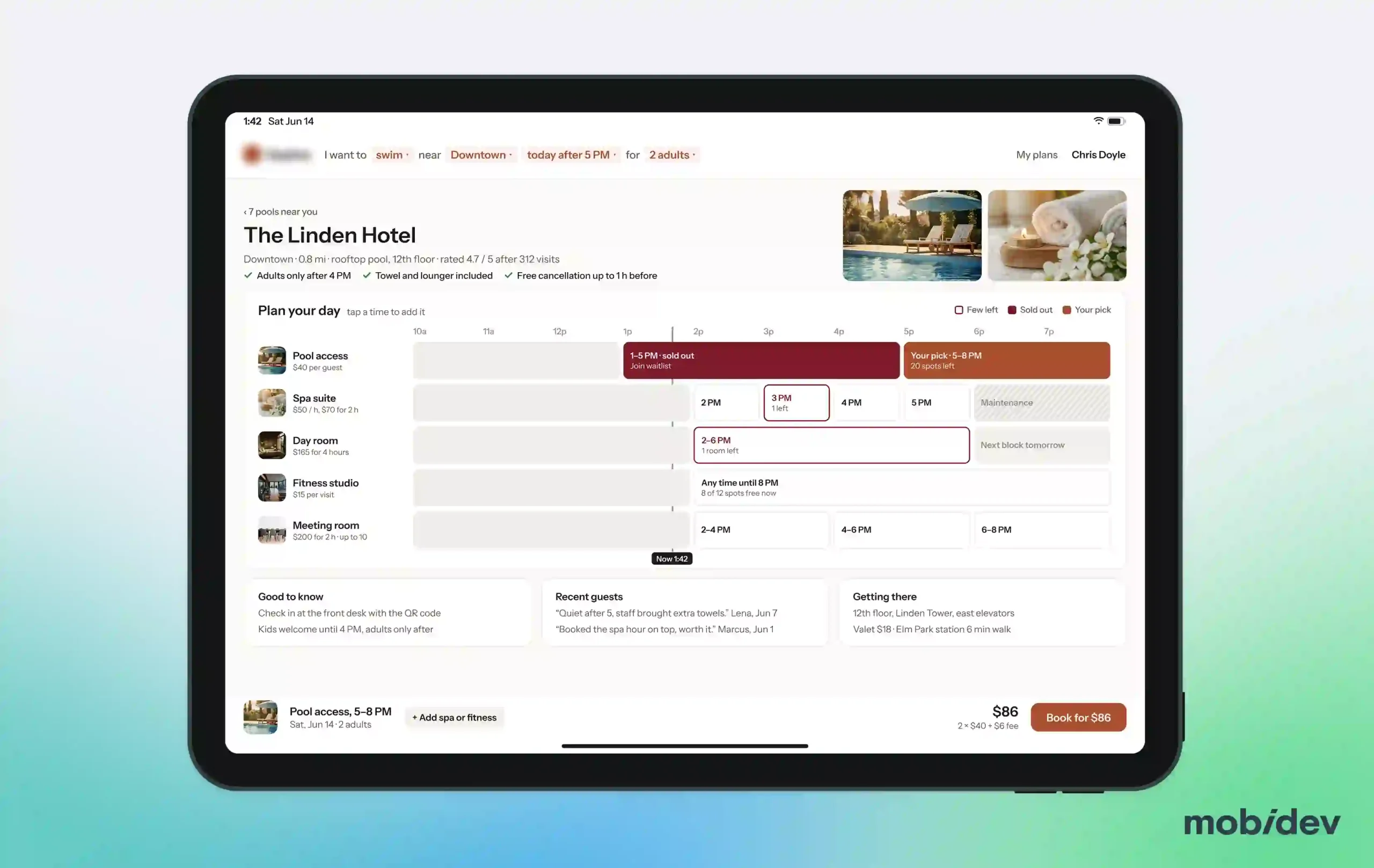
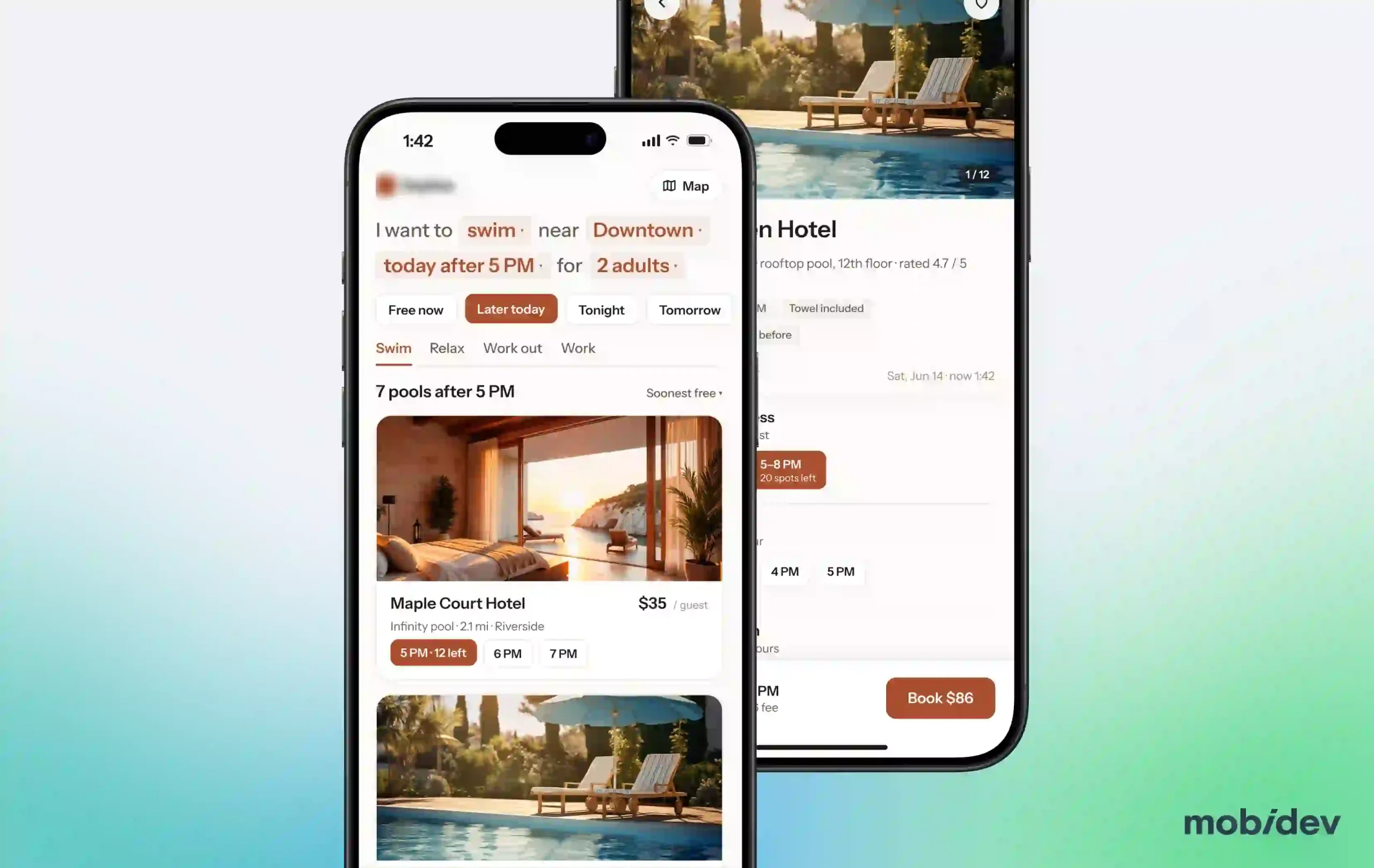
The client runs a two-sided marketplace for hotels and their daytime guests. Hotels of different ratings earn from facilities that sit half-empty during the day, and locals and travelers book a few hours at a pool or spa without staying the night.
After a few years on the market, the platform became harder to change. Technical debt made each new feature take longer to ship than the one before, and the offshore team that built the first version couldn’t keep up.
At that point, the client wasn’t ready to hire a full-cycle in-house team. They were looking for outsourced experts who could cover the platform’s Ruby on Rails and React stack and pay down technical debt without stopping the marketplace. MobiDev took on both.
Business Value of the Marketplace Modernization
$35M in investment secured since launching the upgraded platform.
Legacy system modernization wasn’t the only reason for the investment, but it gave the platform advantages that technical debt had blocked before:
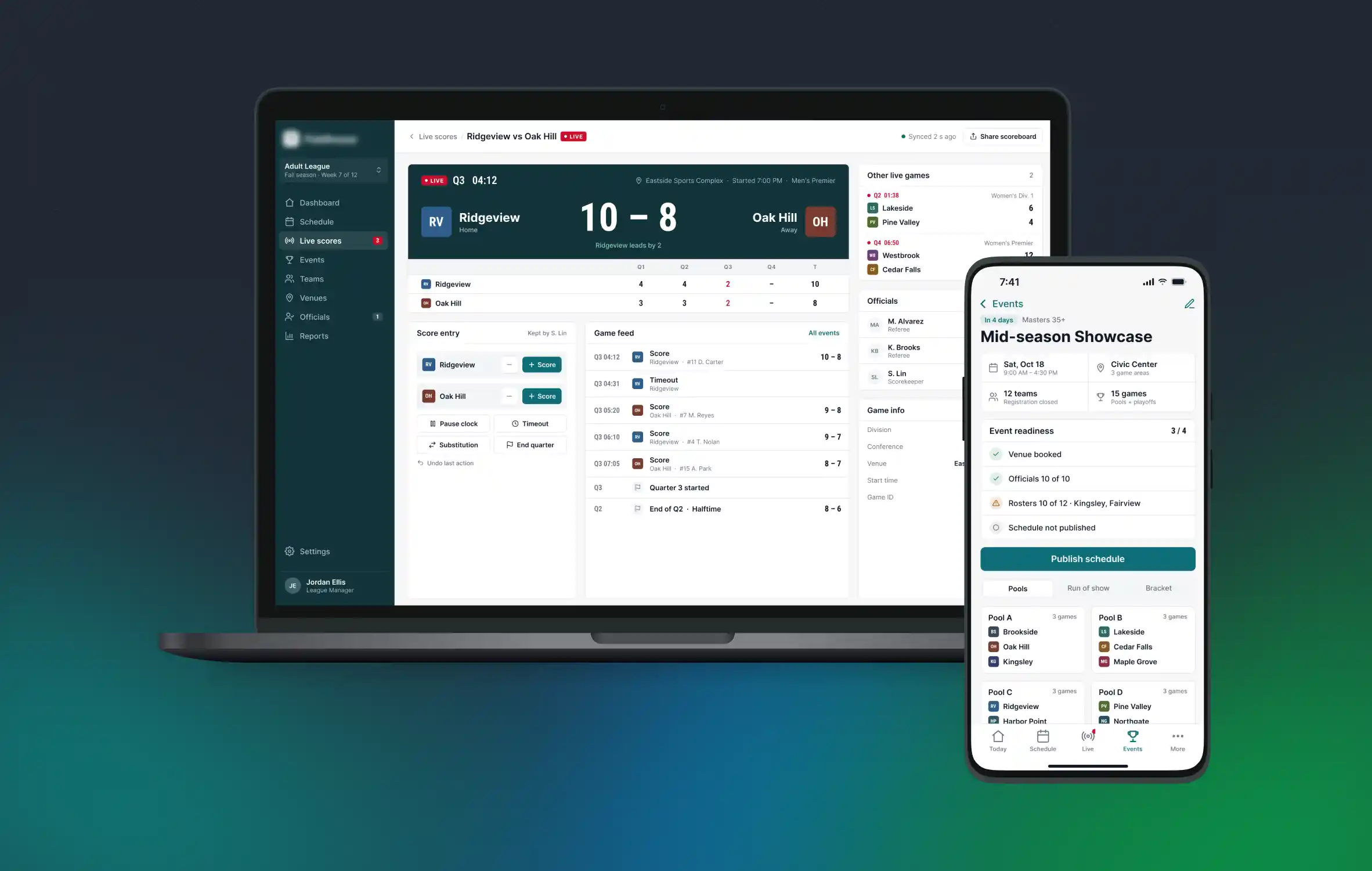
- A smoother user journey. The rebuilt React frontend and refreshed design made booking simpler for guests and managing offers simpler for hotels.
- Room to grow. Scalable API layers, better test coverage, and a reworked Rails backend let the client add hotels and features without the slowdowns of the old system.
Project Scope
Stage 1. Audit. We reviewed the existing system for performance bottlenecks, security risks, scalability limits, and usability issues. The platform had grown over years, so mapping legacy logic and dependencies came first to avoid breaking anything live.
Stage 2. Strategy. We compared partial rebuilds, phased refactoring, and infrastructure upgrades, and chose an approach that kept the product stable for users while backend and UI flows were modernized.
Stage 3. Iterative modernization. We rebuilt outdated parts of the React frontend, refactored backend logic in Ruby on Rails, introduced scalable API layers, raised test coverage, and refreshed the design, in step with the product roadmap. The new API layers also opened the way to microservices: the team can now build each new service in the tech stack that suits the task best.
Stage 4. Performance measurement. Performance monitoring tracked load times, error rates, and uptime from the early iterations. After each cycle, we evaluated the impact and adjusted priorities based on the data.

How the Client Built Its In-House Team Alongside MobiDev
MobiDev started as the client’s full-cycle development team. Over time, the company grew enough to start building its own engineering team, with the plan to hand part of the development over to it while MobiDev continued on the rest.
Together with the client, we assessed the new team’s skills and structure and identified where extra engineers or upskilling were needed. Since the platform ran on Ruby on Rails and React, both teams agreed on shared standards, starting with how React components are built and how the frontend talks to the Rails API.
We helped the in-house team move to agile sprints with regular code reviews and reworked the CI/CD pipeline. Developers from both companies now ship to one codebase as one distributed team, and new features reach users faster.
Tech Stack
Get Your Platform Ready to Scale
Tell us about your product and the technical debt behind it. Our experts will get back to you within 1 business day.
FAQ
Start with an independent audit before any new code is written. A new team needs to see the real state of the system: hidden dependencies, weak spots in performance and security, and which parts of the old work are worth keeping. On the technical side, make sure key components and critical business paths are covered with tests and documentation before changes begin. Then plan changes in phases so the product keeps running while the codebase improves. For this marketplace, the audit came first and shaped every decision that followed.
The signs usually show up in delivery long before they show up in code.
- Updates get vague. You learn about problems late, or only when you ask.
- Deadlines slip repeatedly. Estimates keep growing, and no one can say which part of the work is holding up the release.
- The team avoids hard technical questions. Answers stay general, and every new feature takes longer than the last.
- The product slows down as it grows. Performance issues point to architecture that wasn’t built to scale.
Release changes in a way that never puts the whole system at risk. Use blue-green deployments or canary releases to test updates on a small part of traffic while the main system keeps running. Add feature flags, so you can quickly change and revert back the system behaviour without a new deployment. Replace components step by step instead of all at once, and back each step with automated tests for critical flows such as search, booking, and payment.
Run trial migrations before the real one. Use migration tools that validate, clean, and map data, make sure automatic backups are in place, and rehearse the recovery process before go-live. Keep AI tools away from production access, and give the migration a human owner who approves each step. Treat guest and payment data under PCI DSS and GDPR requirements from the first day of the project.
Modernize when the system starts costing you guests or slowing down growth.
- Guests drop off during booking. 52% of users abandon online booking because of a bad experience (Source: SiteMinder, Changing Traveller Report 2025).
- Every new feature takes longer. Technical debt turns small changes into risky ones.
- The app slows down at peak times. It’s a sign the architecture won’t handle the next stage of growth.
- Competitors invest. 94% of IT decision-makers in hospitality plan some form of technology investment (Source: Amadeus).
Agree on shared practices before the first sprint. Assess together where your team needs extra engineers or upskilling, then align on code review, CI/CD, and architecture standards so both teams ship into one codebase. Set clear boundaries too: a responsibility matrix shows who owns which parts of the system and who makes the final call on each decision. For this client, the in-house team kept the agile workflow, code reviews, and CI/CD setup as its own way of working.
Plan around how guests and hotel staff use the product every day, not only around the code.
- Peak booking days. Weekends, holidays, and high season bring the most bookings. Schedule risky releases for quieter days and keep a rollback plan ready.
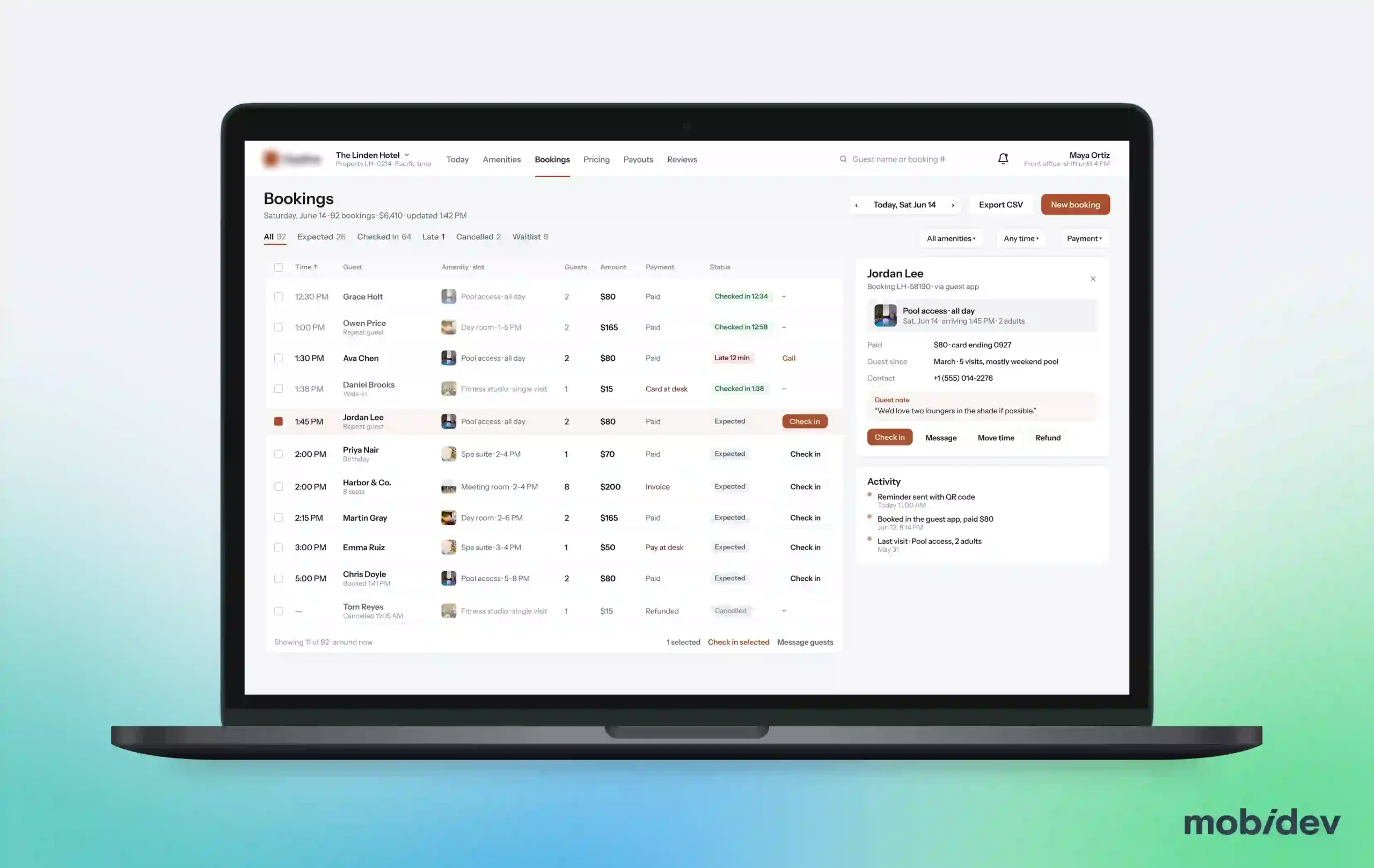
- Both sides of the product. Guests book through one interface, and hotel staff manage offers and capacity through another. Test every change from both sides, because a fix for one can break the other.
- Integrations. Hotel software rarely works alone: it connects to payment providers, property management systems, and online travel agencies. By 2030, online sales are expected to account for 81% of total hotel market revenue (Source: Statista), so these connections will only matter more.
- Small, measurable steps. Replace one part at a time and track load times and error rates after each release. For this marketplace, the React frontend was rebuilt in iterative cycles while bookings kept running.
- AI SDLC, when the project is ready. Bring AI into the software development lifecycle only after the basics are in place: written coding rules, tests for critical flows, and credentials kept out of AI tools’ reach.
AI SDLC (an AI-driven software development life cycle) speeds up modernization when every engineer, in-house or external, works with the same AI rules and the same safety checks.
- Shared AI context in the repository. Keep code style rules, architecture decisions, and task templates in the codebase, so AI tools on both teams follow the same standards.
- Low-risk tasks first. Start with test generation, documenting legacy business logic, and migrating isolated UI components before AI touches booking or payment flows.
- One review pipeline. Run builds, tests, and an AI review bot on every change from both teams, so people review architecture and business logic instead of formatting.
- Measured results. Compare delivery time before and after in a legacy project.