
Migrating a 12-Hotel Booking Engine and Guest Portal from AngularJS to Angular
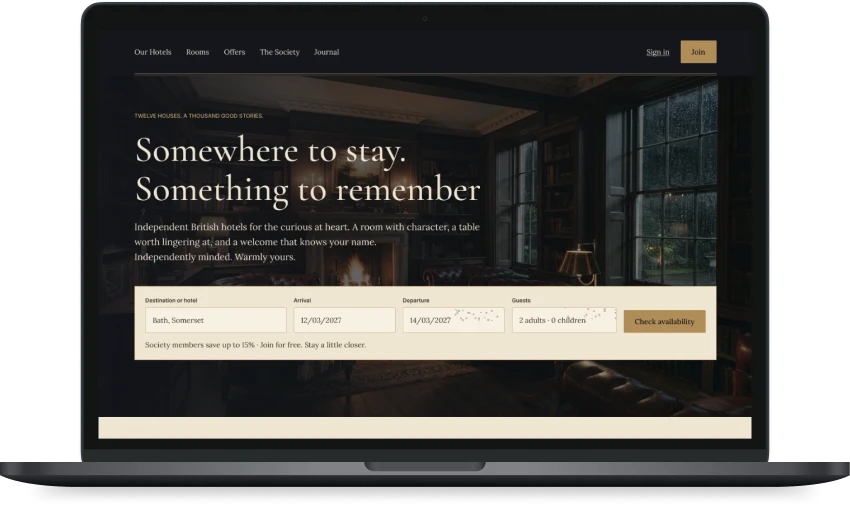
In 2024, a UK-based hotel chain partnered with MobiDev to add loyalty program capabilities and an AI concierge to their website, the source of ~33% of their bookings.
Built on AngularJS back in 2014, it didn’t allow adding the required functionality. We rebuilt the legacy booking engine guest portal on Angular with a proper API layer, and direct bookings rose roughly 22% over the next two quarters.


The Story Behind the AngularJS to Angular Hotel Booking Migration
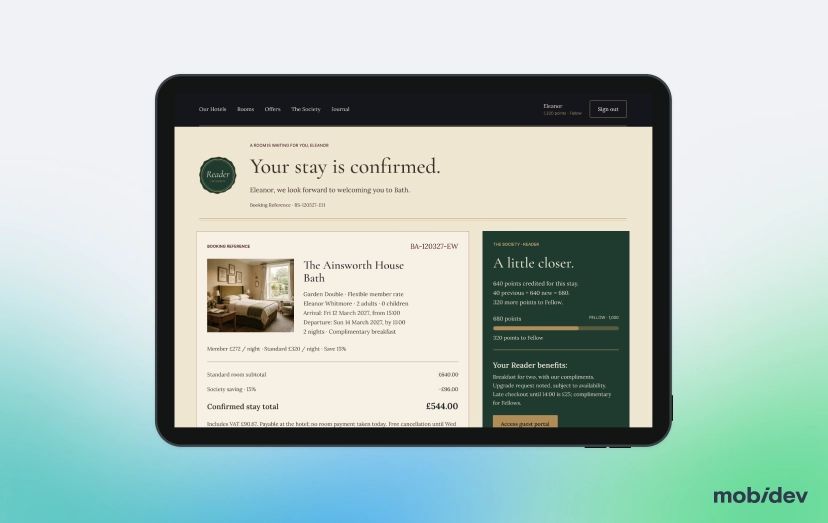
The chain of 12 boutique hotels around the UK was looking for ways to decrease their dependency on the OTAs for room bookings. There were two main reasons. First, the average commission per booking was between 15 and 18%. Second, according to their research, majority of their repeat guests was too low (~30%) vs. a 68% benchmark. The company believed that they could turn the tables by building a loyalty program and an AI concierge directly on their website.
At first, the MobiDev team tried to add new functionality directly on the website without modernization. However, the concierge prototype we built streamed responses token by token, while AngularJS only rendered changes made inside its own digest cycle. As a result, the dev had to update data manually.
After a tech audit, we offered to first transfer the website to Angular, then add the requested features, and the client agreed.
Business Value of the AngularJS to Angular Hotel Booking Migration
What the AngularJS-to-Angular modernization and building a loyalty program and AI concierge brought for the business:
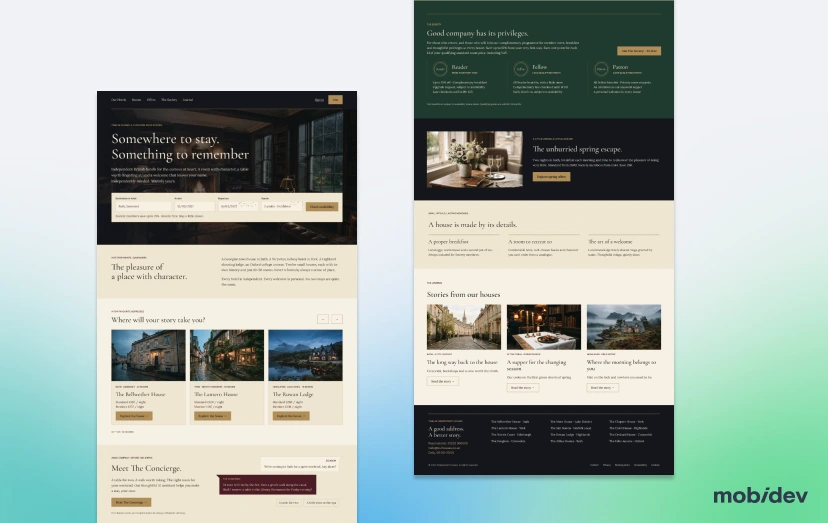
Direct bookings went up 22% in the first two quarters, driven mostly by a loyalty program the old stack could not have supported.
The percentage of repeat guests from their website grew to 71% within a year from the launch of the loyalty program, exceeding the industry benchmarks.
Around £157K kept from OTA commissions. Moving roughly 7,200 room nights a year to the direct channel avoids the fee on each one.
Project Scope of the AngularJS to Angular Hotel Booking Migration
Stage 1. Concierge prototype. We first tried adding the AI concierge to the existing AngularJS website, but its streamed responses did not render without manual updates.
Stage 2. Tech audit. We audited the codebase and proposed moving the website to Angular before adding new features, and the client agreed.
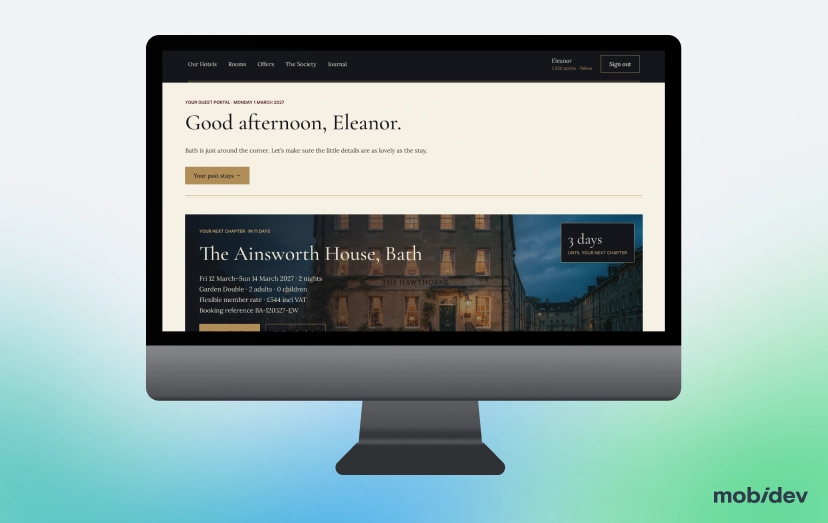
Stage 3. Booking engine and guest portal rebuild. We rebuilt both on Angular (2+) and added an API layer underneath, so business logic no longer lives in the browser.
Stage 4. Loyalty program. We built the loyalty program into the new booking engine, with guest accounts and member benefits applied at checkout.
Stage 5. AI concierge. We built the concierge into the new portal as a native feature, covering guest questions and pre-arrival offers such as late checkout and spa slots.
Deliverables of the AngularJS to Angular Hotel Booking Migration
What the client’s website runs on now:
- Booking engine on Angular
- Guest portal on Angular
- API layer for the booking engine and guest portal
- AI concierge chat with streamed responses, guest Q&A and upsell offers
Tech Stack
Migrate Your Product from AngularJS to Angular
Fill out the form and share your AngularJS migration needs. Our experts will get back to you within 1 business day.
FAQ
All three mean a rewrite, since none shares an upgrade path with AngularJS. Angular (2+) suits teams that want an opinionated structure and TypeScript by default, and it offers ngUpgrade for running both frameworks during the move. React has the largest hiring pool, and Vue is the gentlest step for a small team used to AngularJS templates.
AngularJS apps often keep pricing rules, validation and other business logic in client-side controllers. A modern front end cannot reuse that code, so the logic has to move behind an API first, which also means the next front-end change will not repeat the work.
Common causes in AngularJS apps are a digest cycle slowed down by too many watchers on one page, and third-party payment scripts that update the page from outside the framework, where AngularJS does not notice the change. Both get worse as features pile onto a page that was never refactored.
A booking path that completes without friction on mobile, member rates or perks that the OTA cannot match, and a reason to come back, usually a loyalty program. Pre-arrival offers add revenue per stay once the guest is already booked.
A loyalty program needs guest accounts, a points or perks ledger, rate rules that apply member pricing at checkout, and a connection to wherever stays are recorded. On an old front end with logic spread through controllers, each of those touches fragile code. That is why the program often waits for a rebuild.
Map where business logic lives in controllers and $scope, list every integration and third-party script, check test coverage, and find out who still understands the code. The last point often decides the plan, because knowledge held by one person disappears when they leave.
AngularJS only picks up changes made inside its digest cycle. A token stream from an LLM API or a WebSocket updates the page from outside it, so nothing renders until the code calls $scope.$apply() by hand, and calling it at the wrong moment throws a runtime error. React, Vue and modern Angular do not have this problem.
A basic chat can sit in an iframe on almost any site. A concierge that sells late checkout or spa time needs access to the booking, the guest and the inventory, and that means working with the site’s own code and data. On an old stack, that integration is where the cost goes.
Answering questions about the property and policies, and making pre-arrival offers such as late checkout or spa slots, are realistic and pay back quickly. Fully automated rebooking and deep personalization are often promised and then cut, because they need clean guest data and reliable system access most small groups do not have yet.
It is riskier than on a supported stack. AngularJS has had no security patches since December 31, 2021, and its HTML sanitization, through $sce and ng-bind-html, has historically been the weak point for cross-site scripting. LLM output is untrusted input, so rendering it on a sanitization layer that will never be patched adds a new risk.