
Cut Application Maintenance Costs by up to 50% with Legacy Modernization
Outdated systems drain budgets and limit growth. U.S. companies lose $2.4 trillion more to poor software quality. Modernization turns this burden into an opportunity, cutting infrastructure costs by up to 50%.
One of the largest sports associations, representing 30,000 sports professionals, engaged MobiDev to modernize its 7-year-old platform. Check out the full use case to see how smart transformation turns technical debt into business growth.
Dive into our real-life use case
Where modernization transformed a legacy system into a future-ready platform:

7-year-old system modernized

89.8% backend test coverage achieved

Modern architecture ready for growth
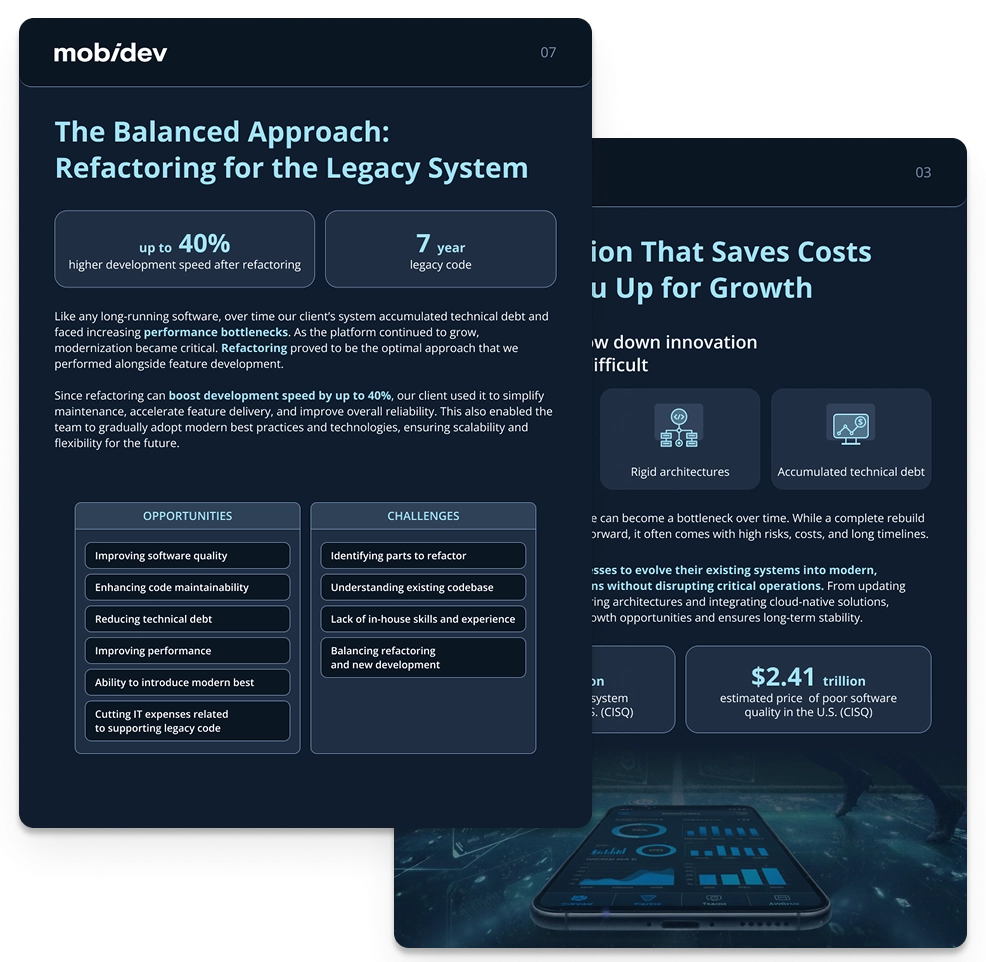
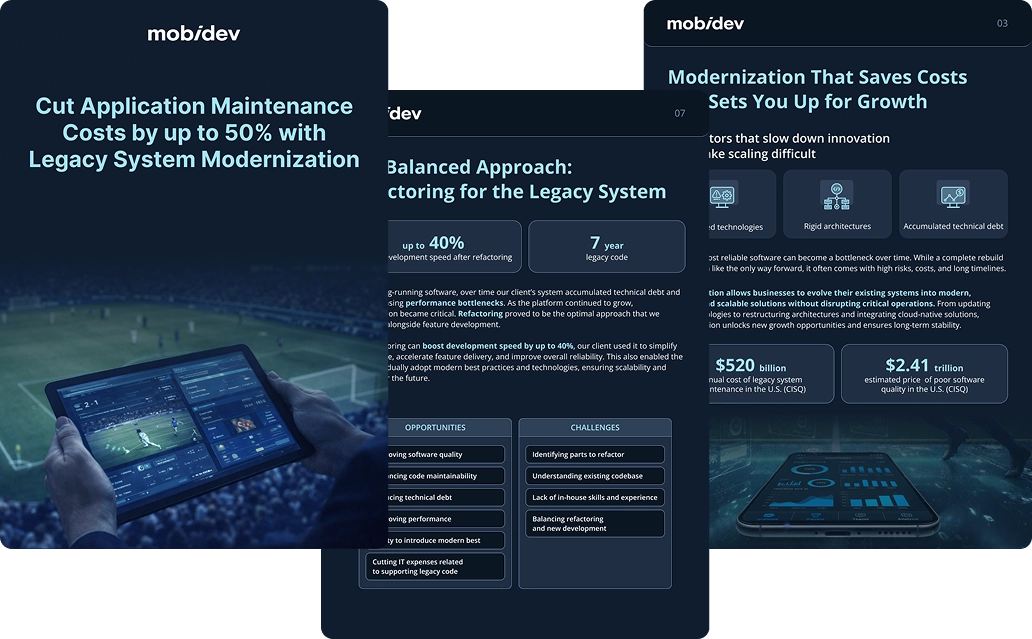
Access the Winning Strategy for Sports Software Modernization
FAQ
The sports association was operating multiple web and mobile applications for event management, live scoring, and scheduling on a 7-year-old legacy codebase. Over time, the system accumulated technical debt, outdated dependencies, and performance bottlenecks, making it harder to scale, introduce new features, and maintain stable operations.
The modernization was performed through a careful, step-by-step upgrade across multiple major Ruby on Rails versions. Because of significant differences between releases, the team updated deprecated libraries (Ruby gems), refactored incompatible components, and conducted thorough testing at every stage to ensure a smooth and secure transition without disrupting ongoing operations.
As part of the upgrade, the test suite was completely overhauled and migrated to RSpec, resulting in 89.8% backend test coverage. This significantly improved code reliability, reduced regression risks, and allowed the team to release updates faster and with greater confidence.
Refactoring eliminated technical debt and optimized system performance while maintaining core functionality. As a result, development speed increased by up to 40%, enabling faster feature delivery and reducing long-term maintenance effort.
By upgrading outdated frameworks, replacing unsupported dependencies, improving architecture, and increasing automated test coverage, the organization reduced the complexity of maintaining legacy code. This led to lower application maintenance and running costs while improving system stability and scalability.
The project followed a phased, incremental modernization approach. Refactoring and framework upgrades were performed alongside ongoing feature development, ensuring that live scoring, scheduling, and member services continued operating without downtime. Team augmentation also helped accelerate delivery without overloading the in-house team.