
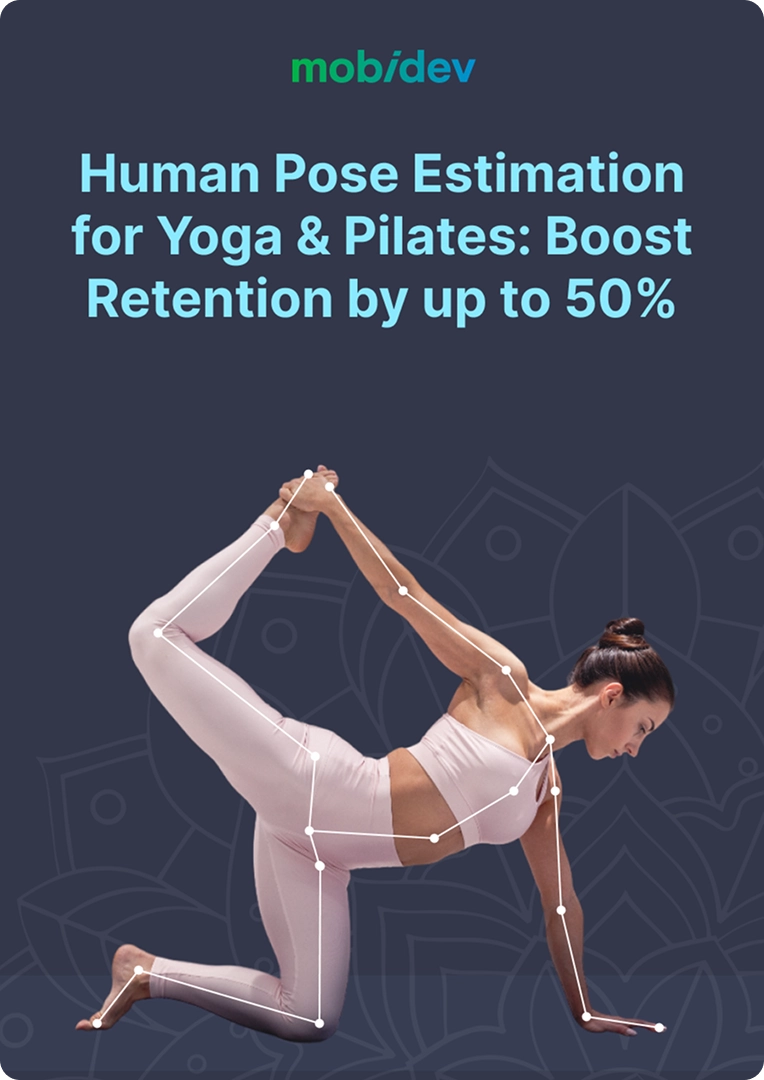
Human Pose Estimation for Yoga & Pilates: Boost Retention by up to 50%
Yoga and Pilates studios face a common challenge: ~50% of new clients drift away within their first 6 months of practice. How to grow engagement?
As more operators engage technologies to elevate the clients’ experience, MobiDev helps them to take the next step, leveraging advanced AI solutions like Human Pose Estimation to deliver deeply personalized guidance and keep their studios at the leading edge of the industry.
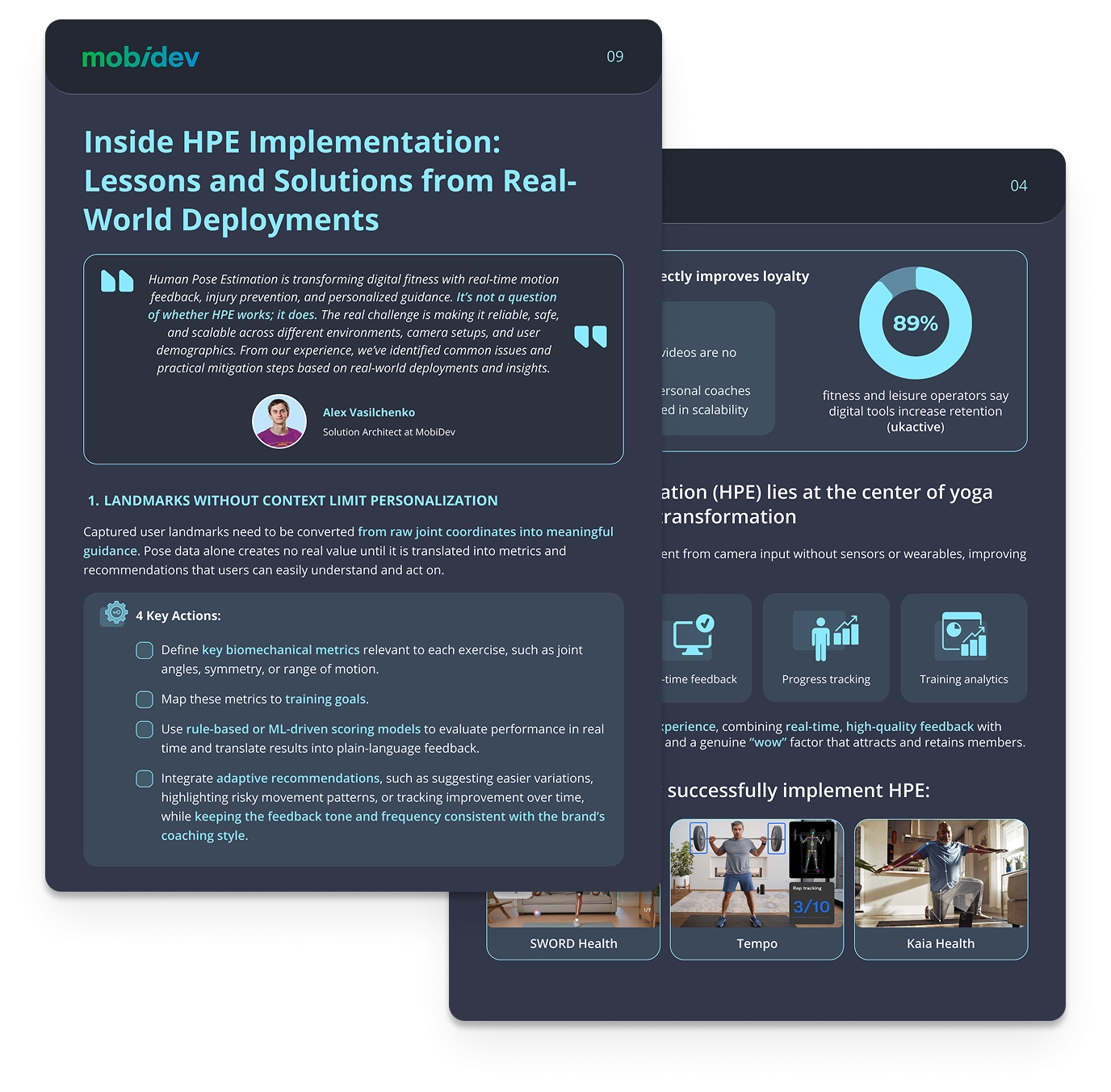
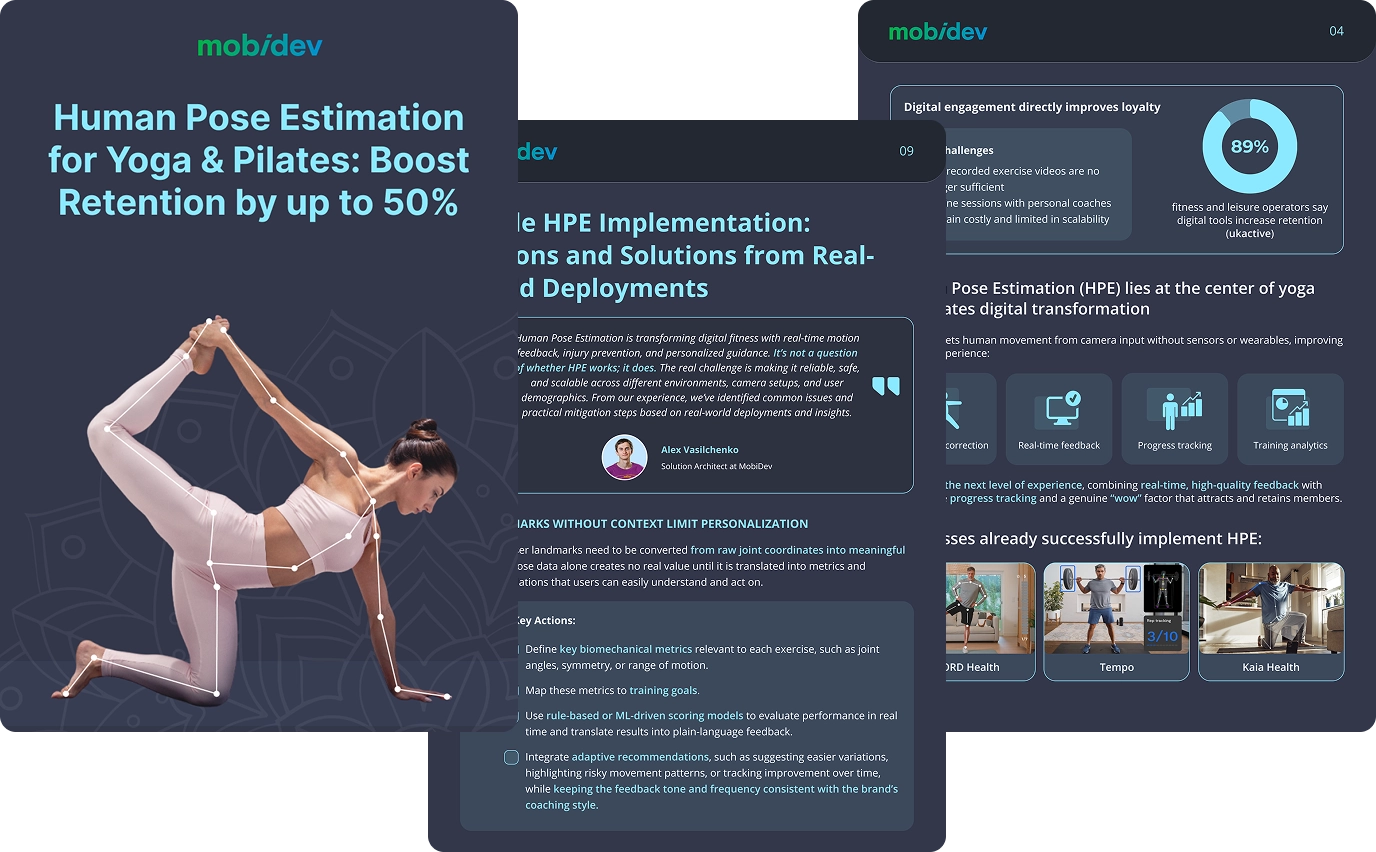
Dive into our real-life use case
See how Human Pose Estimation becomes a strategic growth driver in yoga and Pilates app development by enabling:

Real-time posture analysis and form correction

Interactive, AI-driven training guidance

Progress tracking that boosts retention
I’d rate MobiDev 400 out of 10 for their outstanding work and dedication. The team has been incredible from day one. Their communication, technical expertise, and adaptability set them apart. They did not just build us a human pose estimation app for training; they understood our vision and brought it to life with exceptional AI, computer vision, and backend engineering skills.

Scott Deans
Founder & CEO, BeONE Sports
Explore the Full Use Case of AI in Yoga and Pilates Apps
FAQ ABOUT HUMAN POSE ESTIMATION (HPE) FOR YOGA AND PILATES APPS
Most platforms lose up to 50% of new members within 6 months, largely due to lack of engagement. HPE brings real-time guidance, technique correction, and measurable progress tracking that transforms passive follow-along sessions into interactive coaching. Our use case explains the exact mechanics and architecture behind this shift.
Modern HPE technology can give tailored guidance based on how a person is actually moving. In many yoga and Pilates poses, the system can notice common mistakes, such as uneven shoulders, bent knees, or poor alignment, and suggest small corrections just like an instructor would. It’s not a full replacement for a teacher, but it can reduce the need for constant instructor oversight.
Bias and environment inconsistency are real challenges. The use case breaks down fairness evaluation, dataset strategies, and model-tuning techniques that reduce demographic accuracy gaps (e.g., skin tone, body type, clothing).
Yes, if the architecture is designed correctly. Real-time inference must maintain low latency and power consumption, critical for home sessions. Inside the use case, we detail methods like quantization, pruning, hybrid inference, and power-profiling that make real-time pose feedback smooth even on mid-range smartphones.
The main challenges include turning raw pose landmarks into useful guidance, dealing with limited and non-diverse datasets, making models fast enough for real-time feedback on mobile devices, and ensuring the system works fairly across different body types, lighting, and environments. These factors must be balanced to deliver accurate, consistent, and inclusive pose correction. The use case overview covers these challenges in detail so readers can understand what truly matters for a reliable HPE-powered product.