
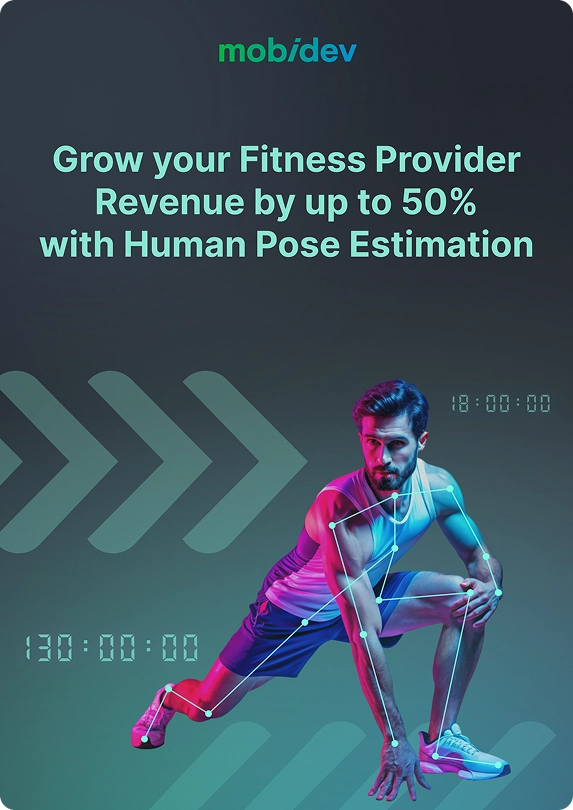
Grow your Fitness Provider Revenue by 50% with Human Pose Estimation
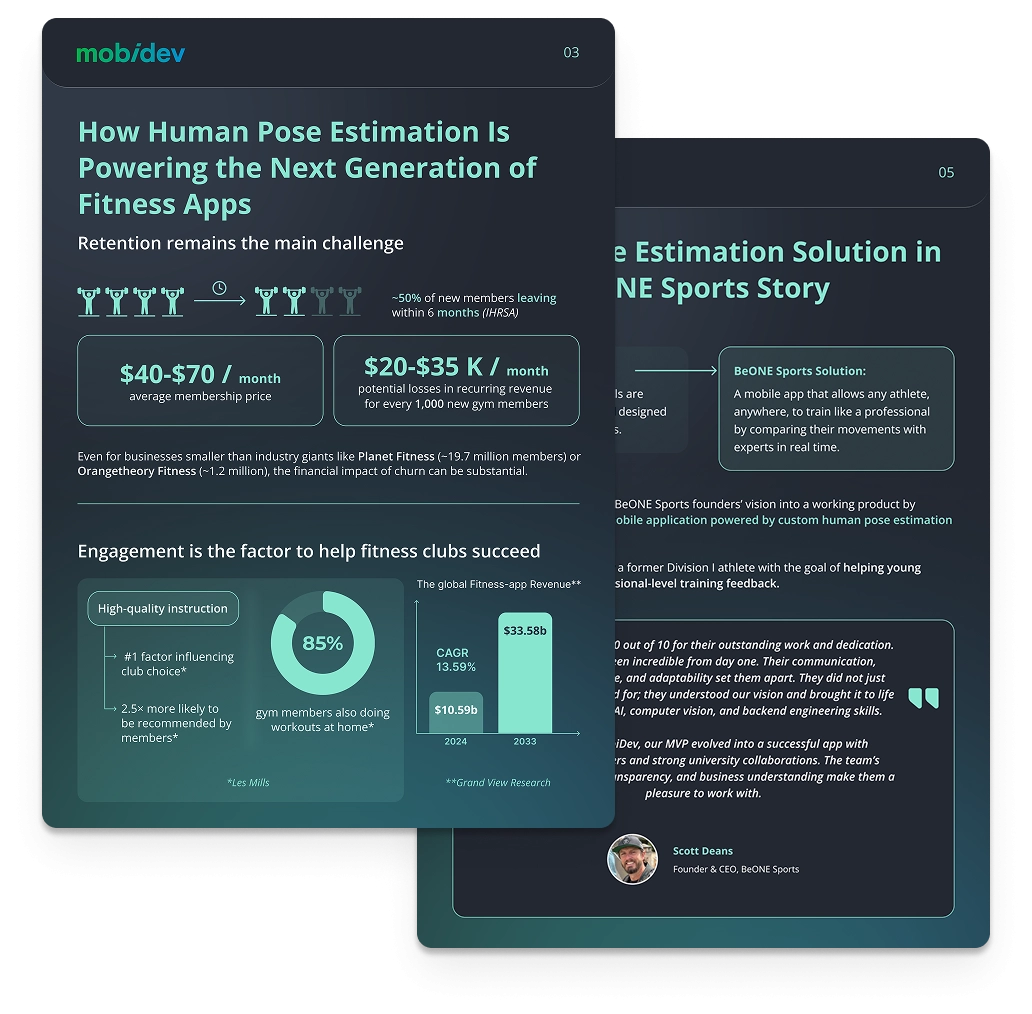
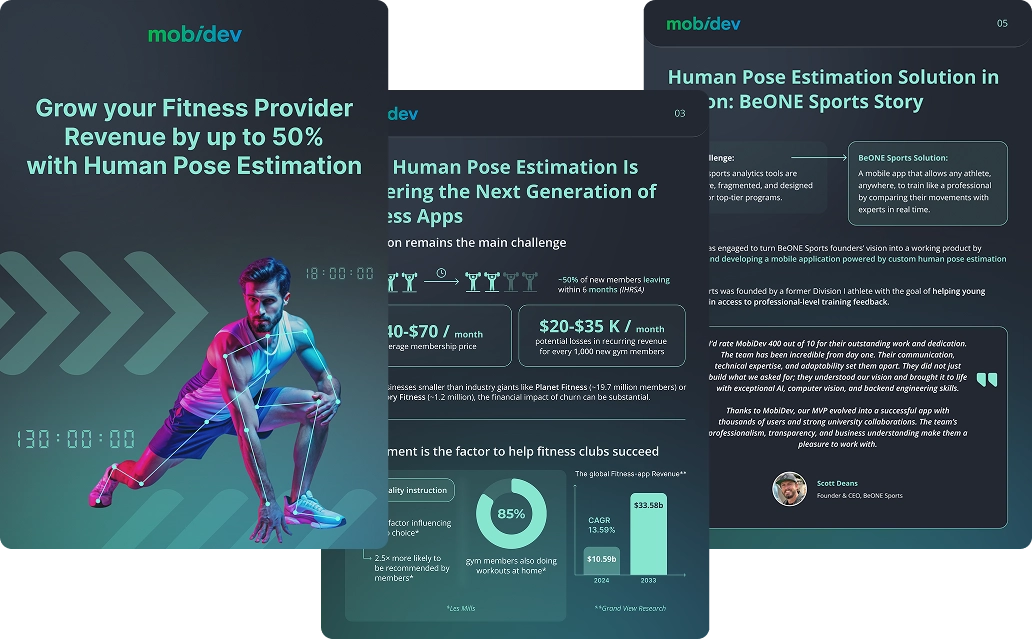
Around 50% of new clients abandon their fitness providers within the first six months. Retention remains one of the key indicators of business success.
While 89% of fitness operators have already experienced the effectiveness of technology in boosting client engagement, MobiDev helps them go even further by leveraging cutting-edge solutions like human pose estimation, to stay at the forefront of the industry.
Dive into our real-life use case
See how Human Pose Estimation becomes a strategic growth driver in fitness app development by enabling:

Real-time posture analysis and form correction

Interactive, AI-driven training guidance

Progress tracking that boosts retention
TESTIMONIAL
I’d rate MobiDev 400 out of 10 for their outstanding work and dedication. The team has been incredible from day one. Their communication, technical expertise, and adaptability set them apart. They did not just build us a human pose estimation app for training; they understood our vision and brought it to life with exceptional AI, computer vision, and backend engineering skills.

Scott Deans
Founder & CEO, BeONE Sports
Access the Full Case of Building Fitness Apps with Motion AI
FAQ ABOUT HUMAN POSE ESTIMATION (HPE) IN FITNESS APPS
Your users can see their movement analyzed in real time, get instant form tips, and can compare their motion to an expert or their past performance. That mix of guidance + visualization turns a simple workout into an interactive experience users want to come back to.
In most cases, no. Modern HPE solutions work with standard smartphone or tablet cameras and do not require additional sensors or wearable devices.
In this use case, you’ll see how a sports-tech app went from idea → MVP → thousands of active athletes and university partnerships by centering the product around pose-based feedback instead of traditional video content. You’ll also see how their infrastructure, AI models, and UX evolved as usage grew.
Architecture, deployment strategy, and model placement (device vs cloud) quietly define whether your product feels instant and premium or laggy and expensive to run. The use case walks through real-world lessons on scaling, optimizing infrastructure costs, and keeping latency low even on mid-range smartphones.
Instead of starting from scratch, you get:
- Implementation patterns that already work in production
- Common pitfalls around datasets, bias, and accuracy across body types and environments
- Practical steps for going from “cool demo” to reliable, compliant deployment.
It’s written for founders, product leaders, and innovation managers to make confident roadmap and vendor decisions.