
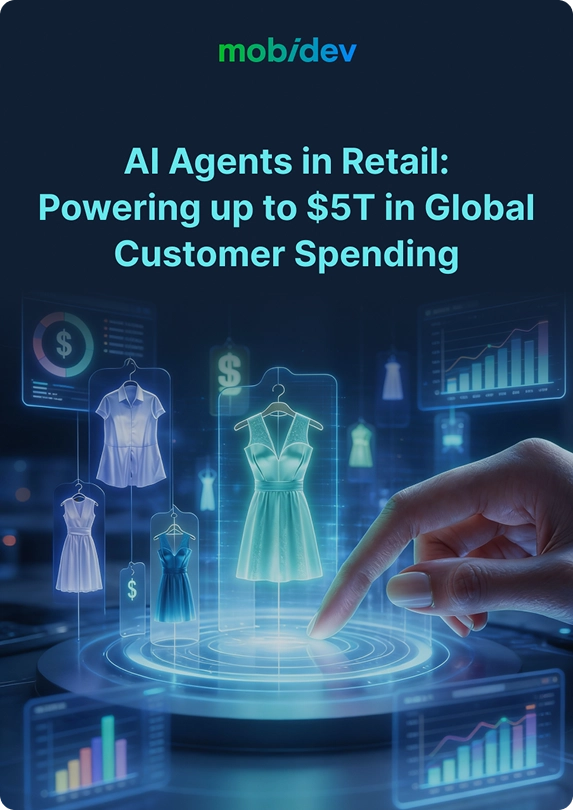
AI Agents in Retail: Powering Up to $5T in Global Customer Spending
AI agents are already transforming retail operations, with 47% of retailers using or assessing agentic AI. From improving process efficiency and enabling real-time decision-making to powering personalized marketing and automating internal workflows, AI agents are becoming a core operational layer in modern retail.
Discover how MobiDev helps retailers turn AI agents into a scalable operational advantage across complex omnichannel environments.
Dive into our real-life use case
See how MobiDev developed an AI-powered Store Operations Agent for a mid-sized omnichannel retailer operating 120+ physical stores to:

Detect inventory and performance risks early across all locations

Decrease in lost sales due to stockouts across selected regions by up to 38%

Increase response to store-level operational issues by up to 27%
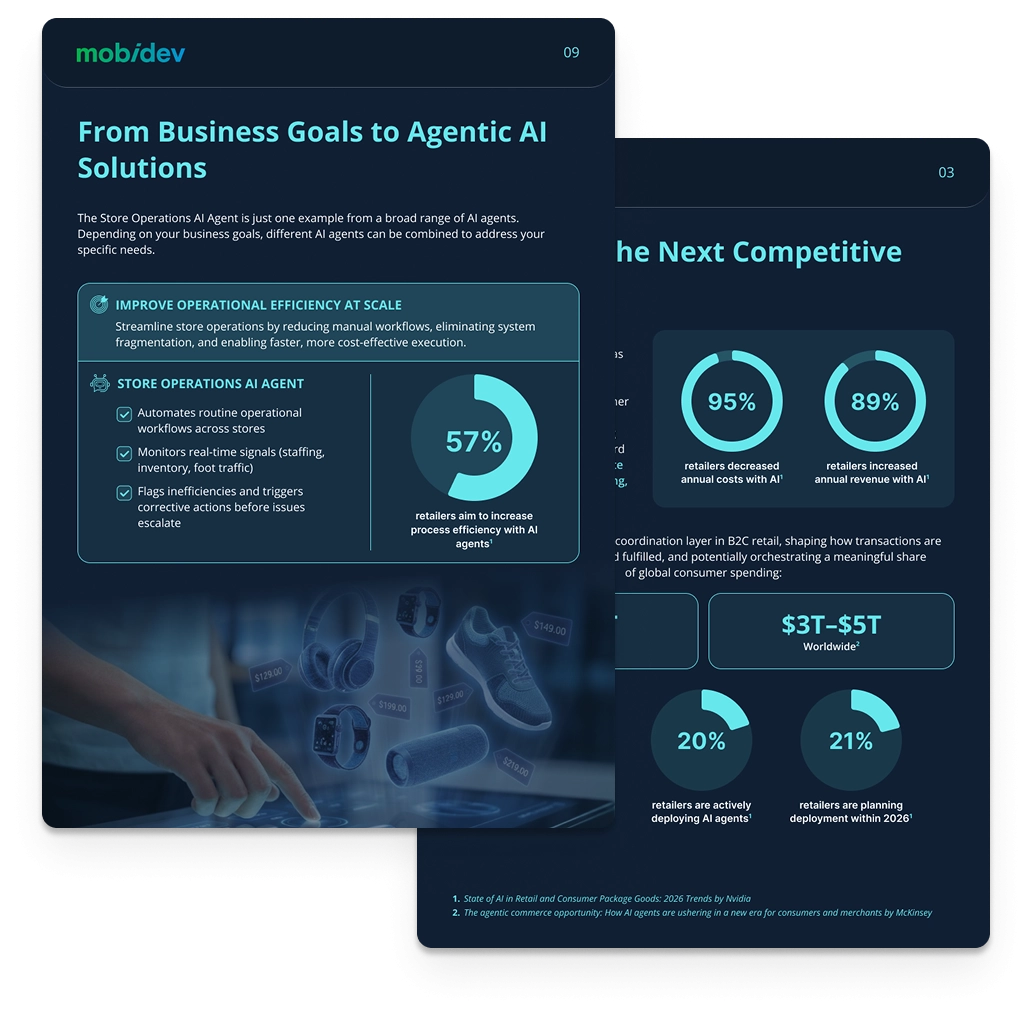
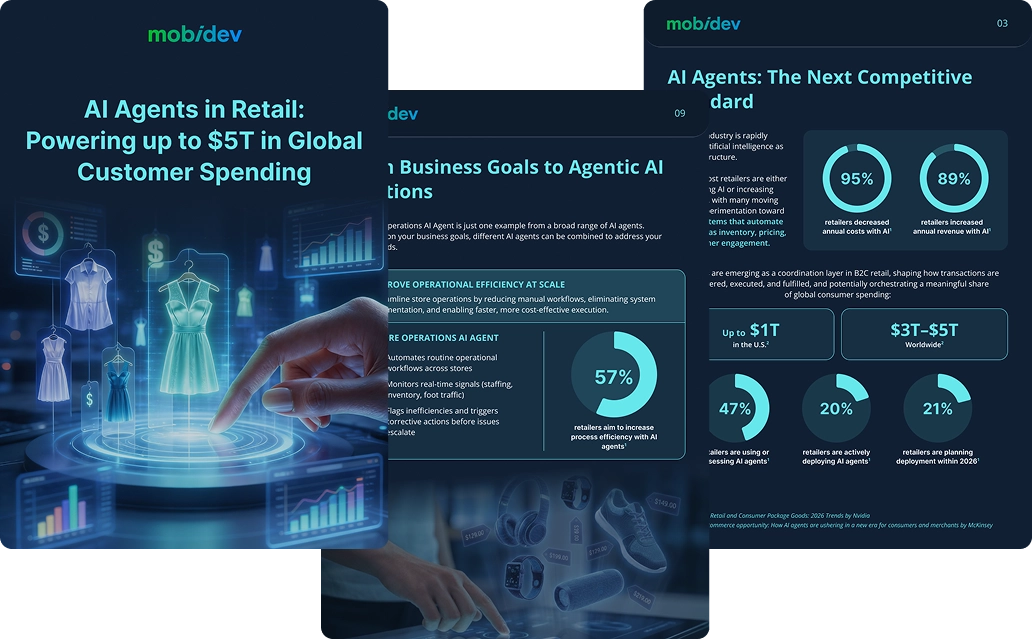
Explore the Full Case of AI Agents in Retail Operations
FAQ
The Store Operations AI Agent addresses fragmented operational visibility, reactive decision-making, and inconsistent execution across retail locations. It helps store managers detect inventory risks, demand anomalies, and performance issues earlier, enabling faster and more consistent operational responses.
The agent follows a three-layer model: it ingests operational signals (e.g., POS data, inventory levels, performance KPIs), analyzes them using contextual logic and machine learning, and translates insights into prioritized actions. Recommendations are delivered within existing store tools and include human-in-the-loop approvals to maintain control and accountability.
Typical inputs include POS sales data, inventory management data, replenishment status, store performance metrics, and optionally external signals such as weather or local events. Structured product catalogs, APIs, and clearly defined business rules improve the accuracy and reliability of agent-driven recommendations.
In this use case, the retailer achieved faster response to store-level issues and reduced lost sales due to stockouts in selected regions. More broadly, AI agents can improve on-shelf availability, reduce operational noise, increase execution consistency, and lower the cognitive load on store managers.
No. The system is designed to augment, not replace, human teams. It automates monitoring and prioritization tasks while keeping final decisions under human supervision through approval workflows and role-based permissions.
AI agents can be applied to demand forecasting, pricing and promotion optimization, customer engagement and loyalty, internal workflow automation, fraud detection, fulfillment, and post-purchase support. Retailers can start with one high-impact agent and scale toward a coordinated multi-agent system aligned with their business priorities.