
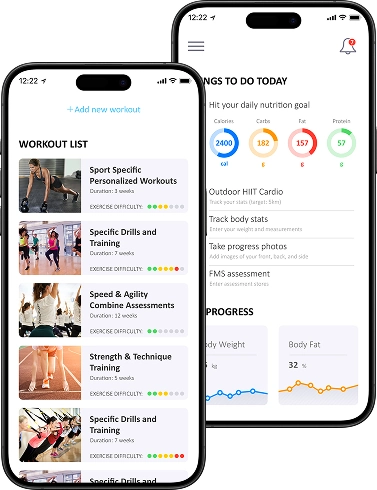
Migrating a Fitness App to React Native without Losing 8 Years of Business Logic
A global fitness company [name under NDA] came to us in 2018 with an outdated mobile application. The app ran on Titanium SDK. Every feature request hit the same three walls: security, stability, cost.
We audited the code, confirmed React Native as the target, and rewrote the application for iOS and Android on one codebase, alongside the client’s in-house backend team. The platform has grown on that codebase since: 85,000+ running businesses, over 1 million individuals trained. We still supply React Native and QA engineers.


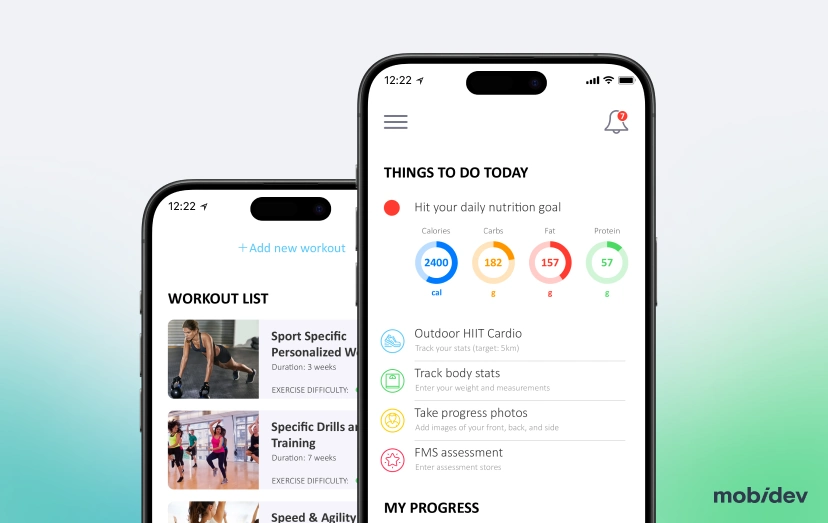
The Story Behind Fitness App Migration to React Native
The client helps fitness trainers and clubs build and keep client relationships. In the late 2010s, they shifted focus to growth and new markets, and one of their core products couldn’t keep up. It had aged past the point where it met security standards, held up reliably, or allowed anything new to be added at a sensible cost.
The stack was the specific problem. Titanium SDK had been a reasonable cross-platform choice years earlier, but became obsolete by 2018.
That made this a rewrite rather than a refactor, which is the riskier option. The value of the app was not in its code. It was in years of accumulated business logic: scheduling, client management, progress tracking, workout programming, and the interconnections between all of it. A rewrite that lost some of that logic would have cost the client more than the outdated stack ever did.
They owned the backend and the product direction. They needed a mobile team that could move the front end onto a stack with a future.
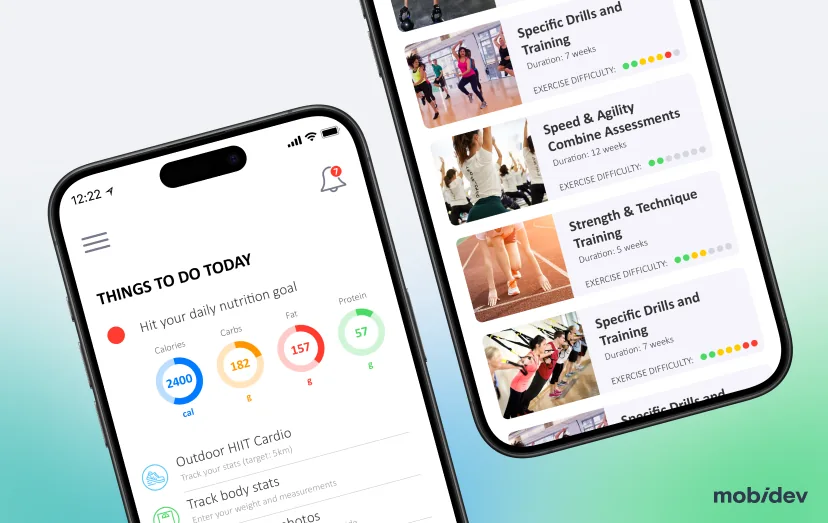
Business Value of Migrating a Fitness App to React Native
- One codebase for iOS and Android. React Native’s library ecosystem, native components, and custom elements covered both platforms from one source. In 2018, that saved up to 80% of the development effort compared with the alternatives we assessed.
- Feature work restarted. It has not stopped since 2018. This was what the client bought.
- 85,000+ running businesses use the platform, and more than a million individuals are trained. Client engagement has tripled since the upgraded version shipped.
- The engagement adapted rather than ended. Project management moved to the client’s side, their in-house engineers joined the mobile work, and the model shifted from dedicated team to team augmentation. Eight years on, we supply React Native and QA engineers on request.
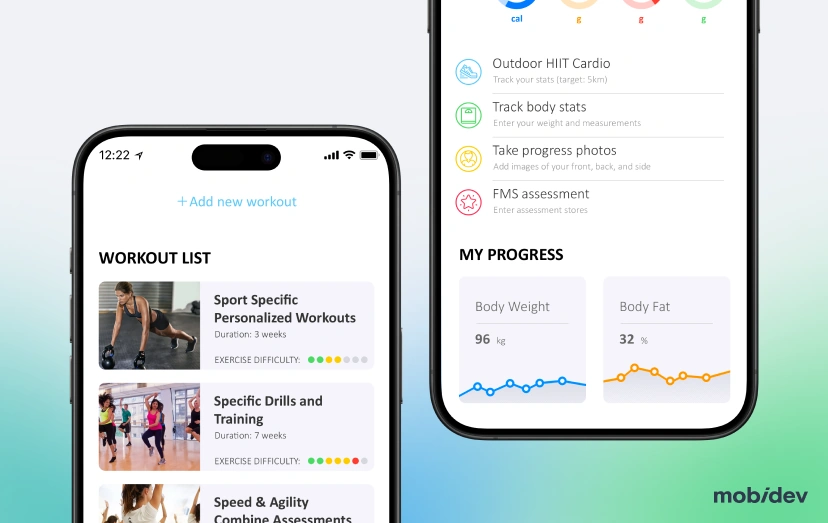
Project Scope of Fitness App Migration to React Native
Four to six experts, working with the client’s in-house backend developers throughout.
Stage 1. Code audit. A full review of the product’s source code before any migration work. It produced three things: confirmation that React Native was the right target, a priority order for the work, and timeline estimates that held.
Stage 2. Migration to React Native. The Titanium codebase had to be rewritten rather than ported, given the complexity of the business logic and the number of interconnections inside the app.
Stage 3. Cooperation model adapted. Team composition changed as the project did. Project management was transferred to the client. Their in-house engineers were allocated alongside our experts. The model moved from a dedicated team to team augmentation.
Stage 4. Process for constant change. Functionality decisions came from user feedback, so requirements moved every sprint, and two teams were touching the same codebase. We worked according to the Airbnb React/JSX Style Guide, the most complete guideline available at the time, so consistency did not depend on who wrote the file.
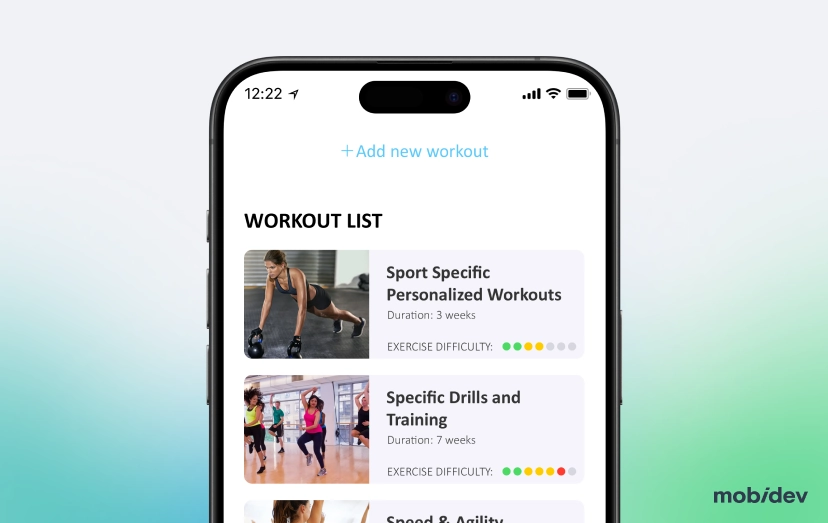
Deliverables of Fitness App Migration Project
- Source code audit with prioritized recommendations and timeline estimates.
- Full migration of the mobile application from Titanium SDK to React Native, iOS and Android from one codebase.
- Real-time features over WebSocket.
- Text-to-speech via React Native TTS.
- Lottie animations.
- Stripe payment integration.
- QA coverage across both platforms.
- Ongoing React Native and QA engineers under team augmentation
Tech Stack
Modernize Your Legacy Prodct
Fill out the form and share your vision for your product modernization. Our experts will get back to you within 1 business day.
FAQ
Audit first, and be prepared for the answer to be rewrite. This client’s app was on Titanium SDK, and the business logic was interconnected enough that a partial migration would have left two half-systems to maintain in parallel. We reviewed the source code before proposing anything. That review is also where the timeline estimate came from.
The question you are answering is whether the logic inside the app is worth more than the code carrying it. For this client, it clearly was.
By what the product has to do next. React Native was confirmed during the code audit against one requirement the client set: a single codebase serving iOS and Android, because they were entering new markets and could not afford to build every feature twice. Measured against the alternatives on the table in 2018, this saved 40% of development effort.
Different requirements would give a different answer. Deep integration with, or dependencies on, platform-specific APIs, a desktop target, or an existing in-house skill set all change the calculation.
Not if the logic is treated as the specification. The Titanium code could not be ported, so every rule inside it had to be re-expressed in React Native intact: scheduling, client management, progress tracking, workout programming, and the connections between them. Extracting and verifying those rules took longer than writing the React Native code that replaced them.
That is how this project has run since 2018. The client’s developers owned the backend the whole way through. We owned the mobile front end and QA. Later, their engineers joined the mobile work directly alongside ours, which only worked because the interface between the two sides had been agreed first.
Yes. This client did, partway through, and the engagement moved from a dedicated development team to team augmentation. We now supply React Native and QA specialists as they are needed.
Most vendors treat that transition as a downgrade. It is the normal shape of a long engagement: a full team gets you through a migration, and specific skills keep the product moving afterwards.
Pick a style guide stricter than feels comfortable and hold to it. On this project, functionality decisions came from user feedback, so the requirements moved constantly, and two teams were writing in the same repository. The Airbnb React/JSX Style Guide was one of the strictest complete guidelines available in 2018, and we adopted it whole rather than picking from it.
It covers most of it. React Native gave this app native components and custom elements where platform behaviour genuinely differed, and shared everything else. The 80% figure is what that came to in practice in 2018. There is still platform-specific work; there is far less of it.
On this project, eight more years so far. After the upgraded app launched we continued feature development, then shifted to supplying engineers on request as the client’s own team grew into the work. MobiDev’s average client retention is 5+ years, and more than half of our clients have been with us 8+ years.
Yes. React Native was right for this client, not right by default. We also migrate to Flutter and to .NET MAUI, including Xamarin apps that need to come off a stack Microsoft has stopped feeding.
Most of this work arrives the same way this project did: a framework that was a sensible choice years ago and now blocks everything. Titanium here. Cordova, PhoneGap, Xamarin, and old Ionic elsewhere. The audit picks the target, and the answer follows from what the product has to do next, not from which framework we like.
Still viable, and this project is the argument. The codebase we wrote in 2018 is still taking new features in 2026, which is the only durability test that means anything. React Native’s new architecture landed as the default in late 2024, Meta ships it in its own products, and the tooling around it has consolidated.
“Better” depends on the product. Flutter tends to win where the interface is heavily custom and animation-led. React Native wins where you live inside device APIs, on-device ML, or AR. React Native wins where the team already writes JavaScript, where web and mobile should share logic, and where feature velocity across both platforms matters more than squeezing the last frame out of the UI.
The framework question is smaller than the one behind it: which stack can your team still hire for, and still ship on, in eight years.
You rarely need a full rewrite to add AI. You do need a stack that can accept a modern SDK.
The practical order is: audit what your current stack can physically support, put the model work where the data already lives, and modernize only the parts standing in the way. Sometimes that is the mobile front end alone, as here. Sometimes it is one service. Rewriting everything first is the expensive way to find out.
The situation is the same on both platforms, and the roadmap decides it, not the language.
Start here: are you adding a second platform?
If no, stay native. Both iOS and Android let you migrate gradually, so you can move module by module instead of freezing feature work for a rewrite. How smooth that is depends on the existing codebase, so it is worth assessing before you commit to a schedule. Staying native also gets you new OS APIs on release day, first-party toolchains, and no framework layer between you and the device.
If yes, the next question is whether a cross-platform stack covers the functionality you actually need. If it does, one codebase beats building every feature twice. That was this client’s call: they set a single requirement in the audit, one codebase for iOS and Android, because they were entering new markets. If it does not (heavy on-device processing, deep hardware access, platform-specific UI), go native on both and accept the duplication.