
Contents:
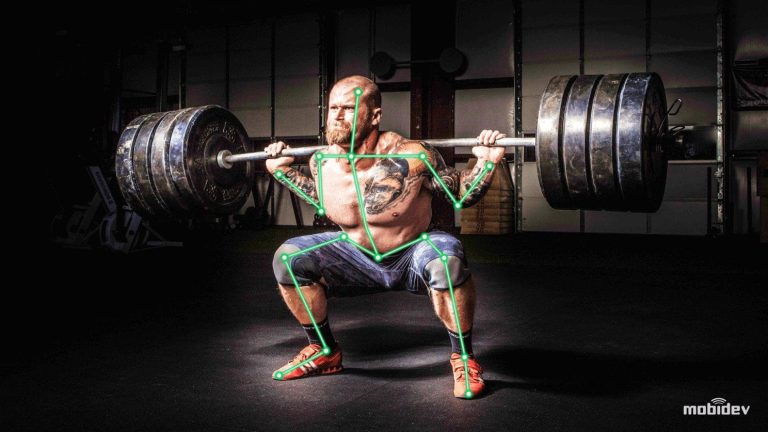
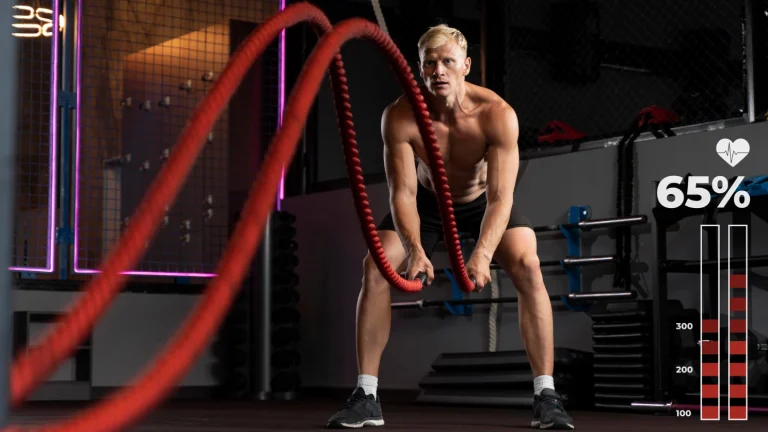
Human pose estimation app development companies help businesses build AI-powered applications that detect, track, and analyze human movement in real time. These providers combine computer vision app development, motion tracking app development, and deep learning engineering to power fitness apps, AI coach platforms, sports analytics systems, and healthcare rehabilitation tools.
This guide evaluates the top 10 vendors specializing in human pose estimation app development services and fitness app AI integration.
10 Notable Human Pose Estimation App Development Companies: Comparison Table
| # | Company | Best for | 2D/3D Pose | On-Device Inference | Mobile Integration | Cloud & MLOps | Clutch Reviews | Hourly Rate |
|---|---|---|---|---|---|---|---|---|
| 1 | MobiDev | End-to-end AI fitness & sports platforms | 2D & 3D | Yes | iOS, Android, Cross-platform | iOS, Android, Cross-platform Yes | 5/5 | $49 – $100 |
| 2 | AI Superior | Custom AI pose systems | 2D | Yes | Mobile & Edge | Yes | 5/5 | $100 - $149 |
| 3 | InData Labs | Deep-custom 2D/3D systems | 2D & 3D | Yes | Mobile & Cloud | Yes | 4.9/5 | $50 - $99 |
| 4 | USM Business Systems | Multi-camera analytics | 2D & 3D | Project-based | Mobile & Enterprise | Yes | Not yet reviewed | Undisclosed |
| 5 | Cloudester | Markerless tracking apps | 2D | Yes | Mobile & Edge | Yes | 5/5 | $25 - $49 |
| 6 | Rapid Innovation | Gesture & motion analytics | 2D | Project-based | Mobile | Yes | Not yet reviewed | $100 - $149 |
| 7 | QuickPose.ai | SDK/API integrations | 2D | Yes | Web & Mobile | Limited | Not yet reviewed | Undisclosed |
| 8 | Sitka.ai | Motion analytics tools | 2D & 3D | Yes | Mobile & Cloud | Yes | Not yet reviewed | Undisclosed |
| 9 | Tezeract.ai | Full AI lifecycle projects | 2D & 3D | Deployment-based | Mobile & Enterprise | Yes | 4.9/5 | $50 - $99 |
| 10 | MotionRex AI | High-fidelity motion systems | 3D | Platform-dependent | Enterprise apps | Yes | Not yet reviewed | Undisclosed |
Methodology
This ranking list is based on these factors:
- Demonstrated experience in human pose estimation app development
- Capabilities in real-time movement tracking and 3D pose estimation
- On-device inference optimization
- Computer vision app development expertise
- Support for AI coach app development and fitness app AI integration
- Mobile deployment and production scalability
Top 10 AI Pose Estimation App Development Companies
1. MobiDev
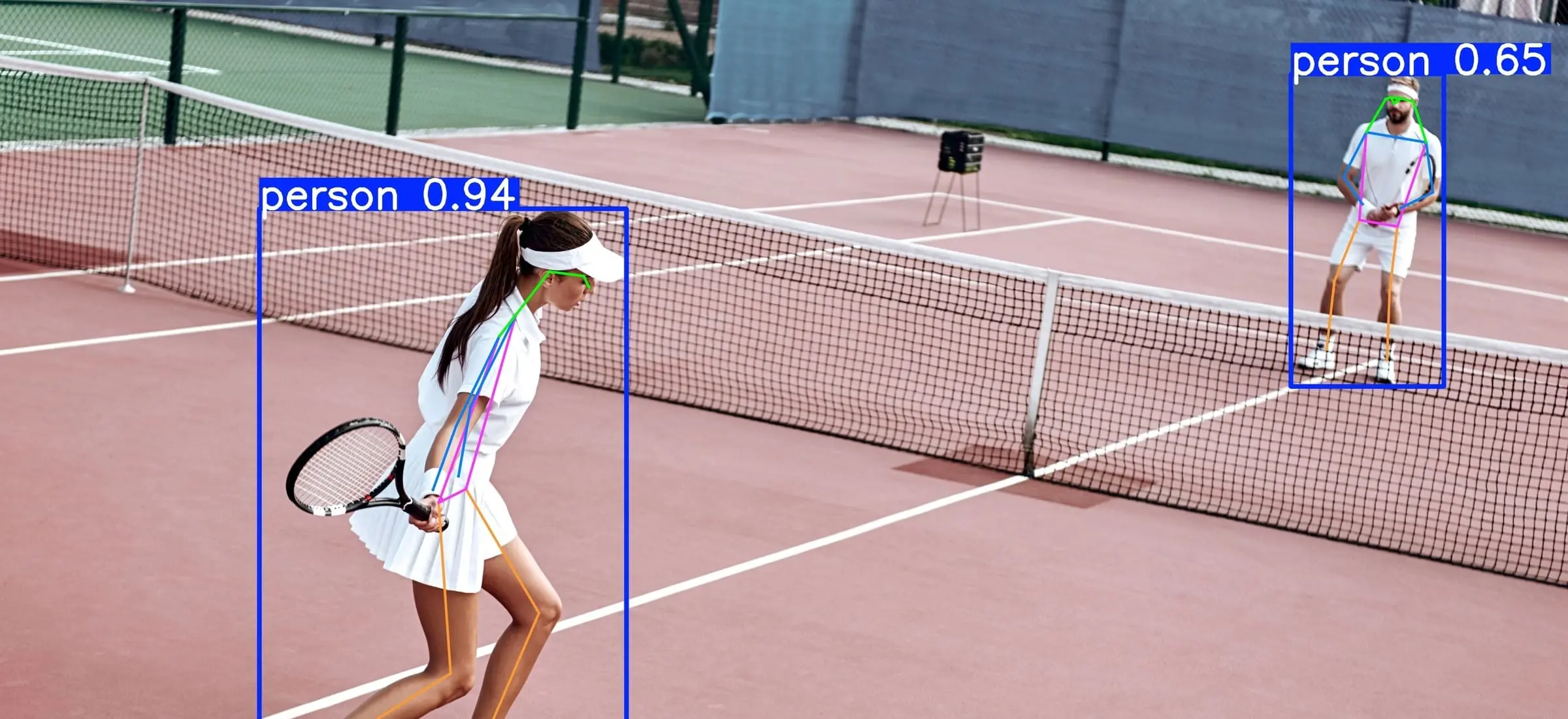
MobiDev is a software engineering company specializing in AI-driven mobile and web application development, including custom human pose estimation solutions for fitness, sports, and health platforms, with proven case studies in AI-powered yoga and Pilates training apps and computer vision systems for tennis performance analysis.
Best For:
Fitness and sports startups, sports clubs & organizations, and health platforms requiring full-cycle development from MVP to scalable AI systems.
Key Highlights:
- Custom human pose estimation solutions
- Real-time form correction and rep counting
- Joint angle tracking and movement analytics
- Experience with MediaPipe, OpenPose, and custom deep learning models
- Full-cycle development including AI, backend, DevOps
Technical Capabilities:
- TensorFlow, PyTorch, OpenCV, MediaPipe
- Swift, Kotlin, Flutter, React Native
- Cloud-native backend architectures
- MLOps pipelines for model training and deployment
- On-device inference optimization for mobile CPUs and GPUs
Quick Facts
Founded: 2009
HQ: Norcross, Georgia, USA
Development Centers: Poland and Ukraine
Team Size: 300+ engineers and AI specialists, 92% of senior and middle level
Clutch Rating: 5/5
Average Hourly Rate: $49 – $100 / hr.
2. AI Superior
AI Superior is a Germany-based AI software development company delivering computer vision and pose estimation solutions for real-time human movement tracking applicable across fitness, sports, healthcare, and other domains.
Best For:
Custom pose estimation systems integrated into fitness and sports applications.
Key Highlights:
- AI-driven pose detection solutions
- Motion analysis systems
- Custom model training and integration
Technical Capabilities:
- Custom deep learning frameworks
- Edge deployment strategies
- Real-time inference pipelines
Quick Facts
HQ: Darmstadt, Germany
Clutch Rating: 5/5
Average Hourly Rate: $100 – $149 / hr.
3. InData Labs
InData Labs is a computer vision and AI development firm providing bespoke human pose estimation, movement analytics, and real-time tracking software.
Best For:
Deep-customized fitness/sports pose estimation systems (2D & 3D) with mobile, cloud, and edge deployment.
Key Highlights:
- 2D and 3D joint tracking
- Multi-person pose detection
- Activity recognition systems
Technical Capabilities
- TensorFlow, PyTorch, ONNX
- Mobile and cloud deployment
- Edge optimization
Quick Facts
Founded: 2014
HQ: Miami, USA
Clutch Rating: 4.9/5
Average Hourly Rate: $50 – $99 /hr.
4. USM Business Systems
USM Business Systems builds custom AI-powered human pose estimation and analysis software capable of detecting and tracking body positions in real time.
Best For:
Fitness & sports apps with multi-camera or advanced analytics needs.
Key Highlights:
- Real-time body tracking
- 2D and 3D pose estimation
- Scalable AI systems
Technical Capabilities:
- Deep learning CV frameworks
- Enterprise system integration
Quick Facts
HQ: Ashburn, VA, USA
Clutch Rating: Not yet reviewed
Average Hourly Rate: Undisclosed
5. Cloudester
Cloudester offers custom human pose estimation software development using computer vision and deep learning for real-time motion tracking.
Best For:
Fitness and sports apps which require accurate movement interpretation.
Key Highlights:
- Markerless detection
- Multi-person support
- Mobile and edge deployment
Technical Capabilities:
- Python deep learning frameworks
- Edge computing optimization
Quick Facts
HQ: New York, USA
Team Size: 100+ developers
Clutch Rating: 5/5
Average Hourly Rate: $25 – $49 / hr.
6. Rapid Innovation
Rapid Innovation builds scalable human pose estimation solutions using advanced computer vision and deep learning tailored to your product needs.
Best For:
Fitness & sports apps with extended movement analysis and interactive analytics.
Key Highlights:
- Real-time body tracking
- Gesture recognition
- Custom AI builds
Technical Capabilities:
- PyTorch and TensorFlow
- Scalable backend infrastructure
Quick Facts
Founded: 2019
HQ: Idaho, USA
Clutch Rating: Not yet reviewed
Average Hourly Rate: $100 – $149 / hr
7. QuickPose.ai
QuickPose.ai provides pose estimation SDKs and APIs to integrate real-time body tracking and movement analytics into apps.
Best For:
Teams wanting ready-to-integrate pose estimation tools for mobile/web fitness apps.
Key Highlights:
- Cross-platform SDKs
- Real-time tracking APIs
- Mobile-first architecture
Technical Capabilities:
- Optimized MediaPipe-style pipelines
- Fast local inference
Quick Facts
Founded: 2022
HQ: UK-linked operations
Team: Specialized AI team
Clutch Rating: Not yet reviewed
Average Hourly Rate: Undisclosed
8. Sitka.ai
Sitka.ai is a computer vision and machine learning services company creating custom human pose estimation and movement tracking tools.
Best For:
Fitness and sports products that require detailed motion analysis and activity recognition.
Key Highlights:
- Activity recognition
- Markerless tracking
- Cloud and mobile deployment
Technical Capabilities:
- Deep learning models
- Scalable data pipelines
Quick Facts
Founded: 2009
HQ: Frisco, Texas, USA
Team: 20+ AI practitioners
Clutch Rating: Not yet reviewed
Average Hourly Rate: Undisclosed
9. Tezeract.ai
Tezeract.ai is an AI software development company delivering pose estimation services, from data collection and model training to integration and monitoring.
Best For:
Projects that need end-to-end AI model development including human pose tracking and 3D estimation.
Key Highlights:
- Data collection and annotation
- 2D and 3D model training
- Monitoring and optimization
Technical Capabilities:
- Custom ML pipelines
- Deployment planning
Quick Facts
Founded: 2021
HQ: Karachi, Pakistan
Team: Small AI development team
Clutch Rating: 4.9/5
Average Hourly Rate: $50 – $99 / hr.
10. MotionRex AI
MotionRex AI provides advanced human pose estimation algorithms that deliver real-time motion insights for apps and enterprise systems.
Best For:
Apps requiring high-fidelity motion reconstruction and behavior analysis.
Key Highlights:
- Real-time pose tracking
- Advanced motion reconstruction
- Enterprise-ready analytics
Technical Capabilities:
- Proprietary AI analytics engines
- Platform-dependent deployment
Quick Facts
Team: Specialized AI team
Clutch Rating: Not yet reviewed
Average Hourly Rate: Undisclosed
How to Choose an AI Pose Estimation Software Development Company
Selecting the right company for AI pose estimation software development services requires evaluation beyond demo accuracy. Production systems must handle device constraints, dataset bias, scalability, and monetization alignment.
1. Proven Domain-Specific HPE Experience
Tracking a golf swing is entirely different from counting push-ups. Look for a team that has actually shipped products in your specific sports niche, so they know exactly how to handle your unique camera angles, occlusion issues, and movement speeds.
What to look for:
- Delivered real-time movement tracking apps
- Experience with AI coach app development
- Demonstrated 2D and 3D pose estimation deployments
Red flags:
- Only research prototypes
- No production case studies
- No mobile deployment history
2. Engineering Depth Beyond Pretrained Models
Off-the-shelf models look great in controlled demos but usually struggle on actual user phones. You need engineers who can fine-tune the math, expand custom datasets, and write the specific logic required to make the tracking survive messy, real-world environments.
What to look for:
- Custom model fine-tuning
- Dataset augmentation and re-annotation
- Multi-model pipelines
Red flags:
- Heavy reliance on out-of-the-box MediaPipe
- No data engineering workflow
3. Scalability & Production Infrastructure
Processing video feeds consumes server compute fast, and cloud hosting costs can escalate rapidly when thousands of users log in at once. A competent vendor builds efficient data pipelines that keep latency predictable while strictly controlling your monthly infrastructure spend.
What to look for:
- Kubernetes-based scaling
- MLOps pipelines
- Monitoring and cost optimization
Red flags:
- No CI/CD for models
- No inference monitoring
4. Mobile Performance Optimization
If an app tells a user to correct their posture two seconds after they finish the rep, the coaching value is lost. Ensure your developers know how to compress models and tune the camera pipeline to hit a stable 60 frames per second directly on the mobile device.
What to look for:
- On-device inference
- Quantization and pruning
- GPU acceleration
Red flags:
- Cloud-only inference for real-time apps
- No FPS benchmarking
5. Data Quality, Bias & Fairness Controls
An algorithm trained on athletes in bright gyms will fail when a user works out in a dim garage wearing baggy clothes. Ask your potential developers exactly how they test for edge cases, body type diversity, and poor lighting conditions before launching an update.
What to look for:
- Dataset diversity validation
- Fairness audits
- Illumination normalization
Red flags:
- No bias mitigation process
- Limited dataset transparency
6. Monetization & Business Impact Understanding
Tracking joints on a screen doesn’t generate revenue unless it actually makes the user want to pay for a subscription. The best developers tie the camera features directly to retention metrics, building habit loops and progress analytics that keep users coming back.
What to look for:
- Integration with subscription models
- Performance metrics tied to engagement
- Analytics pipelines
Red flags:
- No ROI discussion
- Technology-first without business alignment
Conclusion:
Hire production engineers, not just data researchers. You need a team that can prove they know how to deploy heavy models onto mobile phones reliably, backed by a strict plan for handling the edge cases that inevitably pop up after launch.
How much does it cost to build an HPE software?
Costs of AI pose estimation software development depend mainly on architecture (cloud vs hybrid vs on-device), scope (POC vs MVP vs production), and custom features (exercise logic, coaching, personalization, tooling).
| # | Product Stage | Average Duration | Average Price Range | Scope |
|---|---|---|---|---|
| 1 | POC | 1-3 months | $30k–$75k | Validates pose tracking + 1–2 similar exercises + basic scoring and a demo UX. |
| 2 | MVP | 6+ months | $75k–$125k | Typical scope: camera setup assistant, 4–6 exercises, rep counting, 2–3 cues per exercise, recap metrics, basic backend/analytics, device QA. |
| 3 | Production-ready application | 12+ months | $150k–$250k | Expanded exercise library, robust QA/evaluation suite, model rollouts, monitoring, content tooling, personalization, privacy/compliance hardening, tune natural feed and timing of voice feedbacks (if applicable). |
TOP 5 Implementation Tips for Human Pose Estimation Application Development
Motion tracking in the real world is chaotic. Users put their phones at strange angles, move too fast, and stand behind furniture. Plan to build the core tracking first, test it against difficult video clips, and then add strict UX warnings to guide the user into the right camera frame.
1. Latency vs Accuracy Tradeoffs
By performing the analysis directly on the user’s smartphone, network delays are avoided, allowing the app to correct poor posture even before the athlete has finished the repetition. The downside is that mobile hardware severely limits the size of your neural network, forcing developers to heavily compress the model to avoid overheating the device or draining the battery.
Mitigation strategies:
- Use quantized lightweight models
- Combine local inference with cloud refinement
- Benchmark FPS under real conditions
2. Frame Jitter & Signal Noise
Bad lighting and shaky cameras cause the tracking skeleton to glitch and jump around the screen, triggering false coaching cues. You have to write code that smooths out this noise and forces the app to tell the user to adjust the lighting before recording the set.
Mitigation strategies:
- Apply temporal smoothing
- Use Kalman filtering
- Implement illumination normalization
3. Multi-Person & Occlusion Handling
If someone walks behind the user during a squat, the camera gets confused and tries to track the wrong leg. You need strict logic that locks onto the primary user’s identity and simply ignores video frames where the confidence score drops too low.
Mitigation strategies:
- Instance segmentation pipelines
- Confidence threshold tuning
- Multi-model tracking logic
4. Cost Optimization at Scale
Processing 60 frames a second in the cloud for thousands of users will make your unit economics unsustainable very quickly. Process the heavy video feed directly on the user’s phone, and only use the cloud servers to save the final workout metadata and analytics.
Mitigation strategies:
- Kubernetes autoscaling
- Hybrid on-device + cloud architecture
- GPU usage monitoring
5. Dataset Adaptation
Open-source data won’t save you when a user does a burpee in a cramped apartment. Budget heavily for recording your own messy video clips and constantly retraining the system to handle those unpredictable edge cases as you add new exercises.
Mitigation strategies:
- Custom data collection
- Re-annotation cycles
- Continuous model retraining
Final Note
Successful integration of HPE modules into fitness and sports apps requires engineering discipline across mobile optimization, data pipelines, and infrastructure management.
For a deeper understanding of implementation approaches, explore these capabilities that support scalable human pose estimation app development.
| Fitness App Development | | Sports App Development | | AI Consulting | | DevOps Consulting |
FAQ
These companies build the software that lets a smartphone camera track joints and measure movement in real time. Beyond just the math, they engineer the actual mobile app around the camera, writing the logic that counts reps and maintains stability under heavy load.